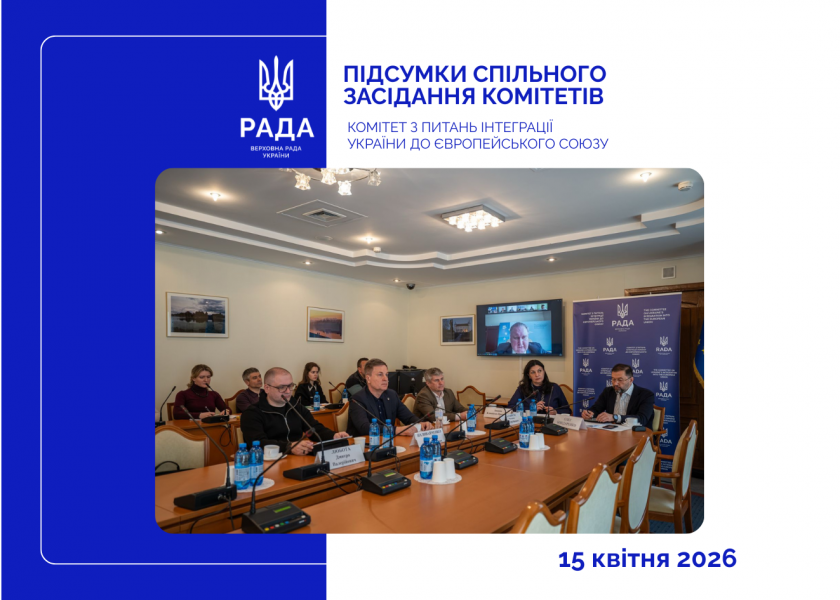
On 15 April, a joint meeting was held by the Verkhovna Rada Committee on Ukraine’s Integration into the EU and the Committee on Environmental Policy and Nature Management. During the meeting, participants heard reports from representatives of the responsible executive and local authorities on the instructions adopted by the Committees following their joint field meeting held on 7–8 November 2025 in Zakarpattia Oblast. The purpose of the field meeting was to examine the situation surrounding the construction of wind power plants in the mountainous areas of Zakarpattia, compliance with environmental legislation, and Ukraine’s international legal obligations in the field of European integration.
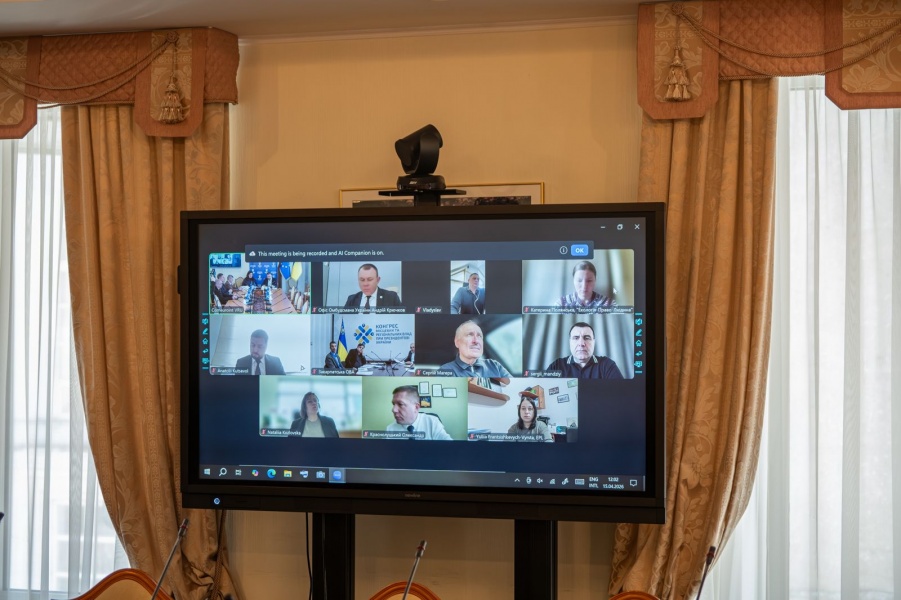
The meeting was attended by Members of Parliament of Ukraine, representatives of the Government and central executive authorities, including Deputy Prime Minister for European and Euro-Atlantic Integration of Ukraine Taras Kachka; deputy ministers of economy, environment and agriculture, energy, and communities and territories development; as well as the leadership of the State Inspectorate for Architecture and Urban Planning of Ukraine and the State Environmental Inspectorate. Representatives of the Zakarpattia Regional State Administration, territorial communities, as well as civil society organizations and the expert community, including environmental initiatives, think tanks, and environmental organizations, also joined the discussion.
During the meeting, Members of Parliament heard information from central and local executive authorities on:
identifying the environmental risks of wind farm construction in the subalpine zone of the Ukrainian Carpathians and alternative options for their location;
the application of environmental impact assessment procedures in the highlands of the Carpathians;
the inventory of investment projects in the renewable energy sector;
the legal status of a foundation as a component of a construction object;
the possibility of lifting the moratorium on state environmental control;
public participation in discussions of urban planning documentation at the local level.
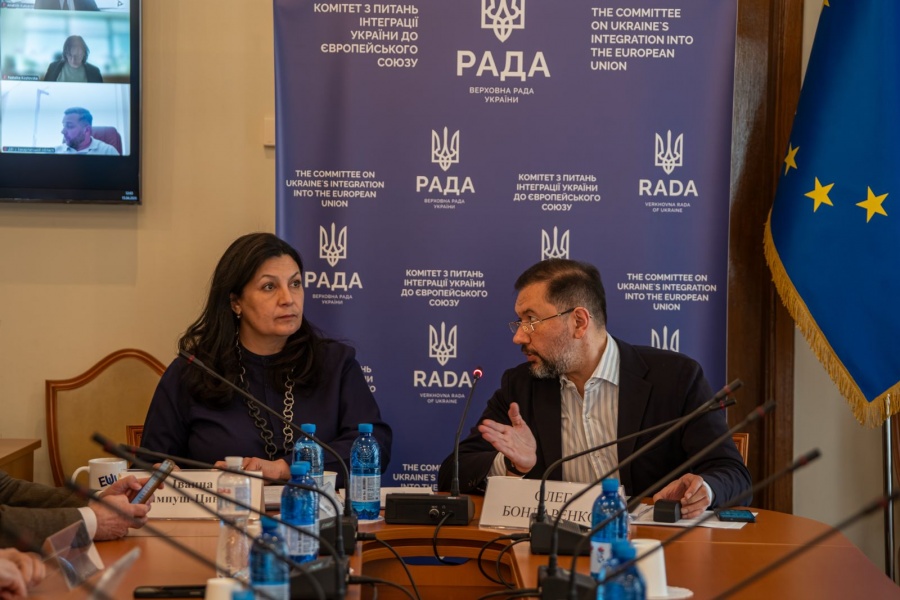
Chair of the Committee on Ukraine’s Integration into the EU Ivanna Klympush-Tsintsadze noted that the issues raised are of fundamental importance, as they lie at the intersection of key public policy priorities: the development of green energy and the fulfilment of European integration commitments. “We understand that these are often difficult to reconcile. We see how, unfortunately, just the other day the Prime Minister said that environmental regulations significantly delay decisions on energy development, and that they are considering options for cancelling some of these regulations. I am very interested in how this can possibly be aligned with our European integration commitments,” Ivanna Klympush-Tsintsadze said.
She added that the Carpathian region is unique. Only 4% of Ukraine’s territory belongs to this region. “I think we are all interested in preserving it as much as possible, based on the trust of both investors and our European partners. And for us, as a Committee, it is important to fulfil our European integration commitments so that no one can accuse us of moving toward the European Union with one foot, insisting that we be accepted as quickly as possible and on some accelerated procedures, while at the same time cancelling the measures that had already been credited to Ukraine as implemented,” Ivanna Klympush-Tsintsadze said.
Chair of the Committee on Environmental Policy and Nature Management Oleh Bondarenko stressed that, for the Environmental Committee, the most important issues are the environmental risks of wind farm construction in the subalpine zone of the Ukrainian Carpathians, proper environmental impact assessment procedures in the Carpathians, and proper state environmental control. “And once again, we will raise, hopefully through joint efforts, the issue of lifting the moratorium on planned and unplanned state environmental control measures. Our Committee insists that any economic activity on the territory of the nature reserve fund, the forest fund, and the Carpathians must be carried out exclusively in accordance with Ukrainian legislation, exclusively in accordance with our European integration aspirations and the commitments we have already undertaken as part of negotiations with the European Union,” Oleh Bondarenko said.
Deputy Prime Minister for European and Euro-Atlantic Integration of Ukraine Taras Kachka noted that the Government takes a practical approach to energy development and environmental protection. “I think that recently the Government and the ministries have provided a considerable amount of information that allows further work to continue in finding a certain balance,” he said.
The Deputy Prime Minister added that, in addition to the formal implementation of norms and rules, Ukraine is also required to understand the actual status of land. “This is a separate benchmark regarding the Emerald Network and the Natura 2000 programme, so that we can have a clear decision on defining the boundaries of these territories. In this process, we must also take into account the needs of reconstruction and the need to respond to the challenges we face in the energy sector,” Taras Kachka said.
Oksana Stankevych-Volosianchuk, an expert with the NGO Ecosphere, insisted that the issue must be addressed comprehensively and strategically, and that the authorities must provide a concrete and clear answer as to whether wind energy can be developed in such sensitive ecosystems as the subalpine zone.
Following the discussion, the Committees took time to review the information provided by the executive authorities and the recommendations from civil society, and to subsequently adopt a final decision.
Chair of the Committee on Ukraine’s Integration into the EU Ivanna Klympush-Tsintsadze emphasized that an extremely important result of the Committees’ work was obtaining a clear conclusion from the Ministry for Communities and Territories Development that separating a foundation as an independent structure does not comply with the requirements of state building standards and legislation in the field of urban planning. Therefore, the artificial separation of a foundation as an independent construction object, which had previously been used to bypass legal requirements, will be eliminated. “I do not quite understand why a separate position of the ministry was needed in order to realize this. Therefore, I hope that the State Inspectorate for Architecture and Urban Planning of Ukraine will have the capacity to provide reasoned explanations as to why a different approach was previously used, and if this was contrary to the law, standards, policy and procedures, then someone should be held accountable for the violations that have already been committed,” she said.
The Committees also announced that they would recommend that the Zakarpattia Regional State Administration and the Zakarpattia Regional Council hold a coordination meeting with the participation of the public in order to improve the involvement of civil society and the expert community in discussions of draft urban planning documentation at the local level. They are also expected to provide information on the measures taken to the Committee on Ukraine’s Integration into the EU and the Committee on Environmental Policy and Nature Management by 30 May 2026.
“The practice of previous discussions in Zakarpattia Oblast shows that data on certain documents was published rather late and quietly, and public discussion took place in an entirely formal way, without what one might call the European component, which requires the involvement and serious consideration of the positions of all stakeholders, not just selected ones,” said the Chair of the Committee on Ukraine’s Integration into the EU.
She also noted the importance of the fact that the Ministry of Economy, Environment and Agriculture is preparing a comprehensive review of renewable energy plans and their locations across Ukraine. She expressed hope that this would be done in compliance with current Ukrainian legislation and European integration commitments.
The meeting was attended by Members of Parliament of Ukraine, representatives of the Government and central executive authorities, including Deputy Prime Minister for European and Euro-Atlantic Integration of Ukraine Taras Kachka; deputy ministers of economy, environment and agriculture, energy, and communities and territories development; as well as the leadership of the State Inspectorate for Architecture and Urban Planning of Ukraine and the State Environmental Inspectorate. Representatives of the Zakarpattia Regional State Administration, territorial communities, as well as civil society organizations and the expert community, including environmental initiatives, think tanks, and environmental organizations, also joined the discussion.
During the meeting, Members of Parliament heard information from central and local executive authorities on:
identifying the environmental risks of wind farm construction in the subalpine zone of the Ukrainian Carpathians and alternative options for their location;
the application of environmental impact assessment procedures in the highlands of the Carpathians;
the inventory of investment projects in the renewable energy sector;
the legal status of a foundation as a component of a construction object;
the possibility of lifting the moratorium on state environmental control;
public participation in discussions of urban planning documentation at the local level.
Chair of the Committee on Ukraine’s Integration into the EU Ivanna Klympush-Tsintsadze noted that the issues raised are of fundamental importance, as they lie at the intersection of key public policy priorities: the development of green energy and the fulfilment of European integration commitments. “We understand that these are often difficult to reconcile. We see how, unfortunately, just the other day the Prime Minister said that environmental regulations significantly delay decisions on energy development, and that they are considering options for cancelling some of these regulations. I am very interested in how this can possibly be aligned with our European integration commitments,” Ivanna Klympush-Tsintsadze said.
She added that the Carpathian region is unique. Only 4% of Ukraine’s territory belongs to this region. “I think we are all interested in preserving it as much as possible, based on the trust of both investors and our European partners. And for us, as a Committee, it is important to fulfil our European integration commitments so that no one can accuse us of moving toward the European Union with one foot, insisting that we be accepted as quickly as possible and on some accelerated procedures, while at the same time cancelling the measures that had already been credited to Ukraine as implemented,” Ivanna Klympush-Tsintsadze said.
Chair of the Committee on Environmental Policy and Nature Management Oleh Bondarenko stressed that, for the Environmental Committee, the most important issues are the environmental risks of wind farm construction in the subalpine zone of the Ukrainian Carpathians, proper environmental impact assessment procedures in the Carpathians, and proper state environmental control. “And once again, we will raise, hopefully through joint efforts, the issue of lifting the moratorium on planned and unplanned state environmental control measures. Our Committee insists that any economic activity on the territory of the nature reserve fund, the forest fund, and the Carpathians must be carried out exclusively in accordance with Ukrainian legislation, exclusively in accordance with our European integration aspirations and the commitments we have already undertaken as part of negotiations with the European Union,” Oleh Bondarenko said.
Deputy Prime Minister for European and Euro-Atlantic Integration of Ukraine Taras Kachka noted that the Government takes a practical approach to energy development and environmental protection. “I think that recently the Government and the ministries have provided a considerable amount of information that allows further work to continue in finding a certain balance,” he said.
The Deputy Prime Minister added that, in addition to the formal implementation of norms and rules, Ukraine is also required to understand the actual status of land. “This is a separate benchmark regarding the Emerald Network and the Natura 2000 programme, so that we can have a clear decision on defining the boundaries of these territories. In this process, we must also take into account the needs of reconstruction and the need to respond to the challenges we face in the energy sector,” Taras Kachka said.
Oksana Stankevych-Volosianchuk, an expert with the NGO Ecosphere, insisted that the issue must be addressed comprehensively and strategically, and that the authorities must provide a concrete and clear answer as to whether wind energy can be developed in such sensitive ecosystems as the subalpine zone.
Following the discussion, the Committees took time to review the information provided by the executive authorities and the recommendations from civil society, and to subsequently adopt a final decision.
Chair of the Committee on Ukraine’s Integration into the EU Ivanna Klympush-Tsintsadze emphasized that an extremely important result of the Committees’ work was obtaining a clear conclusion from the Ministry for Communities and Territories Development that separating a foundation as an independent structure does not comply with the requirements of state building standards and legislation in the field of urban planning. Therefore, the artificial separation of a foundation as an independent construction object, which had previously been used to bypass legal requirements, will be eliminated. “I do not quite understand why a separate position of the ministry was needed in order to realize this. Therefore, I hope that the State Inspectorate for Architecture and Urban Planning of Ukraine will have the capacity to provide reasoned explanations as to why a different approach was previously used, and if this was contrary to the law, standards, policy and procedures, then someone should be held accountable for the violations that have already been committed,” she said.
The Committees also announced that they would recommend that the Zakarpattia Regional State Administration and the Zakarpattia Regional Council hold a coordination meeting with the participation of the public in order to improve the involvement of civil society and the expert community in discussions of draft urban planning documentation at the local level. They are also expected to provide information on the measures taken to the Committee on Ukraine’s Integration into the EU and the Committee on Environmental Policy and Nature Management by 30 May 2026.
“The practice of previous discussions in Zakarpattia Oblast shows that data on certain documents was published rather late and quietly, and public discussion took place in an entirely formal way, without what one might call the European component, which requires the involvement and serious consideration of the positions of all stakeholders, not just selected ones,” said the Chair of the Committee on Ukraine’s Integration into the EU.
She also noted the importance of the fact that the Ministry of Economy, Environment and Agriculture is preparing a comprehensive review of renewable energy plans and their locations across Ukraine. She expressed hope that this would be done in compliance with current Ukrainian legislation and European integration commitments.
More posts by topic
“News”
16 September 2026 12:00
20 April 2026 10:15
16 April 2026 13:30
09 April 2026 11:01
07 April 2026 11:34
24 February 2026 10:38
19 February 2026 10:33
11 February 2026 10:31
09 February 2026 10:29
06 February 2026 10:25