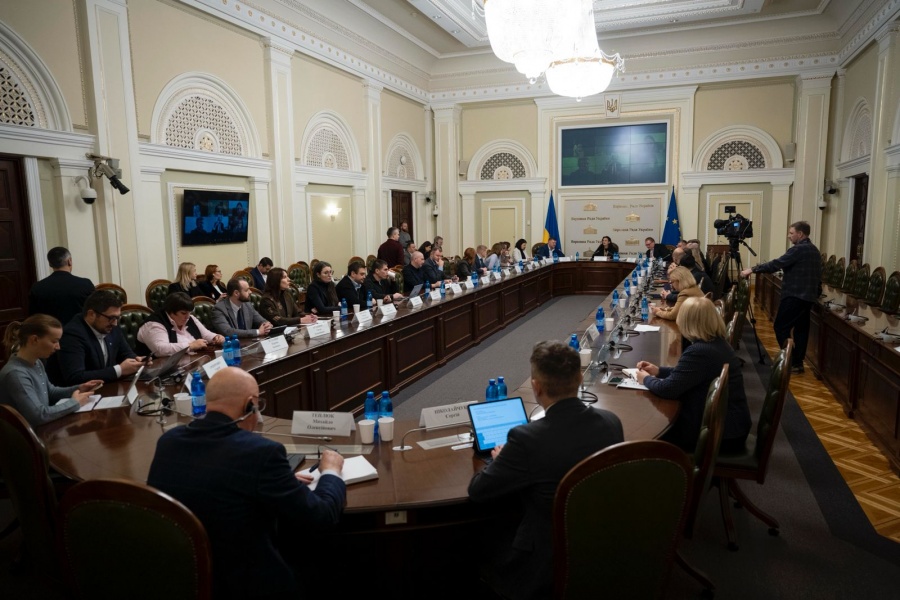
On 21 November, the Committee on Ukraine’s integration into the European Union held an extraordinary meeting dedicated to the next steps to take into account and implement the recommendations outlined in the European Commission’s Report on Ukraine under the 2025 Enlargement Package.
The meeting was attended by: First Deputy Speaker of the Verkhovna Rada of Ukraine Oleksandr Korniyenko, Deputy Prime Minister for European and Euro-Atlantic integration Taras Kachka, EU Ambassador to Ukraine Katarína Mathernová, Members of Parliament and Committee Members, Chairs of the Verkhovna Rada subcommittees on European integration, as well as representatives of civil society organisations that prepared a shadow report on Ukraine’s progress.
First Deputy Speaker of the Verkhovna Rada Oleksandr Korniyenko noted that the European Commission’s Report demonstrated which sectors in Ukraine require additional attention in terms of fulfilling obligations on the path to the EU. He stressed that the alignment of Ukrainian legislation with EU law remains one of the key tasks. It is assessed in the EU report according to two parameters: depth and dynamics. “We must keep these two parameters in mind. We understand that even with substantial depth in a certain direction, if we lose dynamics, we may have to catch up for a long time,” said Oleksandr Korniyenko. He called on all parliamentary committees to work together on a plan of draft laws to be adopted by the Verkhovna Rada on the path toward EU membership.
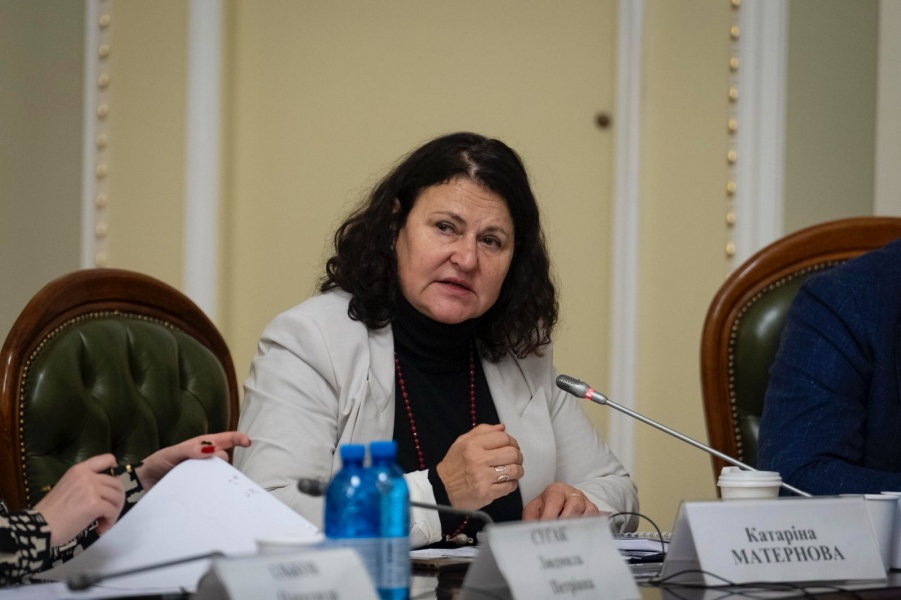
EU Ambassador to Ukraine Katarína Mathernová noted that this year’s report of the European Commission on Ukraine is positive. “I would like to highlight the truly impressive progress that Ukraine has achieved since applying for EU membership. This report gives credit where it is due, and identifies weaknesses where necessary. I believe it is well balanced, as it demonstrates progress from last year,” Ambassador Katarína Mathernová said. She added that in terms of dynamics, good progress is reported in twelve areas this year, compared to only six last year. “As for depth, last year progress was recorded in one area, whereas now it is seen in seven. There is consistent work in a number of sectoral areas and on a number of very important steps on the path to accession. Here I would like to recognise the key role of the Verkhovna Rada, all of you as the Committee on European Integration, as well as the European integration focal points in other committees and the parliamentary leadership,” she said.
At the same time, she noted that the communication around the report recognises the need to reverse negative trends related to pressure on specialised anti-corruption institutions and civil society in Ukraine. “A corruption scandal has erupted in the country, and I think that, for now, we see very close cooperation with the government in trying to understand how we can reverse some of these trends. Much of what needs to be done is set out in the report, in particular in the ‘Fundamentals’ cluster,” Katarína Mathernová added.
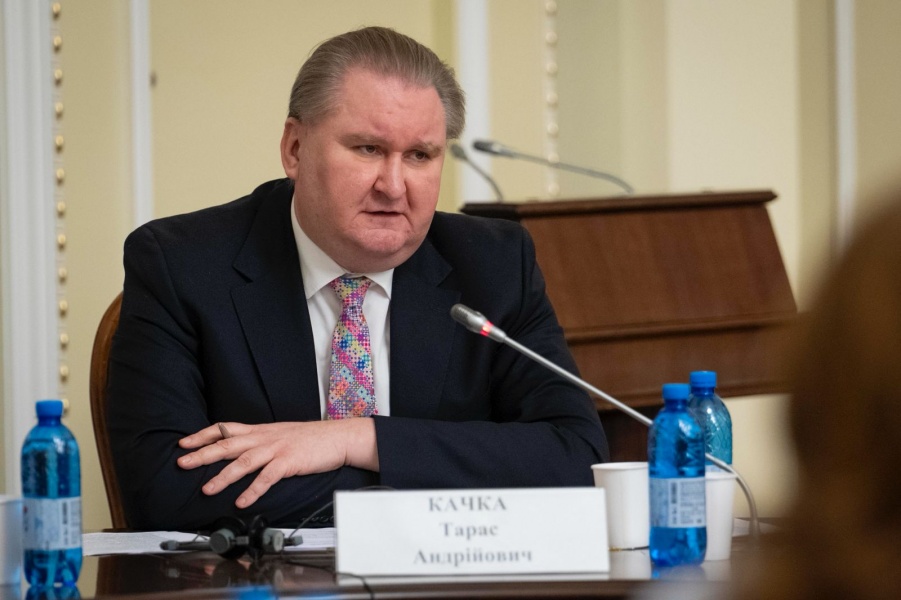
Deputy Prime Minister for European and Euro-Atlantic integration Taras Kachka stressed that this year’s EC report on Ukraine’s progress is very positive. Regarding the next steps, he noted that alongside the Association Agreement and the Enlargement Report, another planning track has been added: the screening process, which has already been completed, and the National Programme on Legislative Approximation. “This gives us the opportunity to identify precisely what needs to be done at the legislative level,” he said. According to him, the Enlargement Report also contains recommendations on what steps Ukraine needs to take next. “These recommendations correspond to what we have in the screening reports. We can accomplish this, as the Government previously committed, by the end of 2027. So within the next two years. This is a fully realistic scenario,” Taras Kachka stated. “We are in the group of countries for which the European Commission is confident that negotiations can be successfully completed. We have a horizon of 2030 for accession, which many European partners increasingly view confidently. The year 2028 is mentioned as the potential year to conclude accession negotiations, meaning on the Agreement on Ukraine’s Accession to the European Union. To make this happen, we should accomplish the legislative and institutional work over the next 24 months,” he added.
The Chair of the Committee on Ukraine’s integration into the EU, Ivanna Klympush-Tsintsadze, stressed that Ukraine must assess its progress honestly and objectively. “It is important that we all look honestly in the mirror, see our flaws and work on them… Focus on how we prioritise tasks together so that we genuinely move forward on all the essential tracks,” she said. She underlined that amid anti-corruption investigations in Ukraine and concerns among society and partners, it is necessary to implement clear and decisive measures to restore public and international confidence. “In my view, the fulfilment of our EU integration tasks and the clear prioritisation of their implementation can be part of those actions that will pave the way toward securing further strong support from both society and our partners,” Ivanna Klympush-Tsintsadze noted.
Advocacy Manager for European integration at the ZMINA Human Rights Centre Anastasiia Datsiv highlighted that both civil society in the Shadow Report and the European Commission in the Enlargement Report recognise increased transparency in the work of Parliament. “The work of the Verkhovna Rada and its committees has become more open, both in terms of broadcasts and in overall access for the public. We express our gratitude to your Committee for this. However, there are many sectoral committees that do not follow the same practices on very important draft laws and are still very difficult to approach,” she said, calling on parliamentary committees to ensure transparency and cooperation.
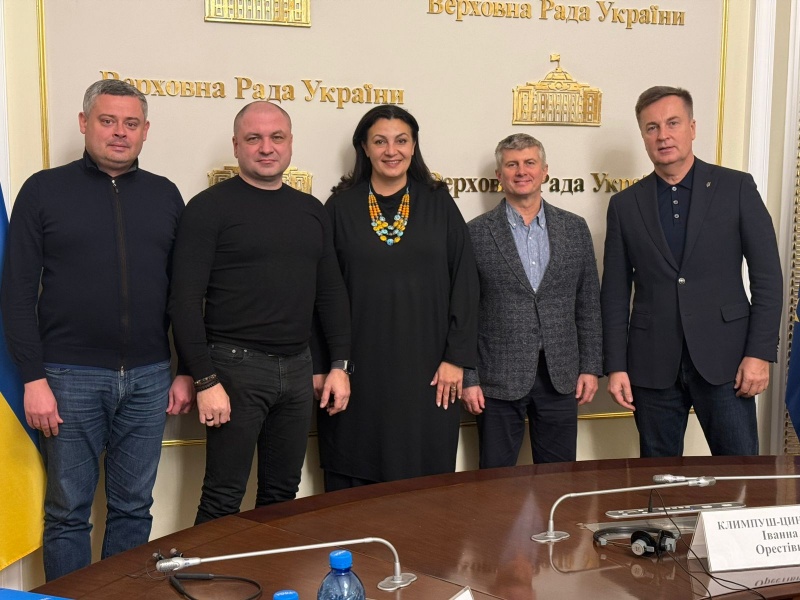
Ivanna Klympush-Tsintsadze thanked all participants for their contributions and discussions on the country’s priority tasks. She emphasised the significant role of civil society, its systematic work, and its readiness to support the state in implementing priority reforms that are crucial for every Ukrainian today. “We must remain strong and united in difficult times not only to repel the enemy and preserve the state, but also to ensure, through perseverance, coordination, the ability to prioritise and to listen to each other, that we truly achieve the dream and the goal of the Ukrainian people, which is to bring the country into the European Union,” she concluded.
The meeting was attended by: First Deputy Speaker of the Verkhovna Rada of Ukraine Oleksandr Korniyenko, Deputy Prime Minister for European and Euro-Atlantic integration Taras Kachka, EU Ambassador to Ukraine Katarína Mathernová, Members of Parliament and Committee Members, Chairs of the Verkhovna Rada subcommittees on European integration, as well as representatives of civil society organisations that prepared a shadow report on Ukraine’s progress.
First Deputy Speaker of the Verkhovna Rada Oleksandr Korniyenko noted that the European Commission’s Report demonstrated which sectors in Ukraine require additional attention in terms of fulfilling obligations on the path to the EU. He stressed that the alignment of Ukrainian legislation with EU law remains one of the key tasks. It is assessed in the EU report according to two parameters: depth and dynamics. “We must keep these two parameters in mind. We understand that even with substantial depth in a certain direction, if we lose dynamics, we may have to catch up for a long time,” said Oleksandr Korniyenko. He called on all parliamentary committees to work together on a plan of draft laws to be adopted by the Verkhovna Rada on the path toward EU membership.
EU Ambassador to Ukraine Katarína Mathernová noted that this year’s report of the European Commission on Ukraine is positive. “I would like to highlight the truly impressive progress that Ukraine has achieved since applying for EU membership. This report gives credit where it is due, and identifies weaknesses where necessary. I believe it is well balanced, as it demonstrates progress from last year,” Ambassador Katarína Mathernová said. She added that in terms of dynamics, good progress is reported in twelve areas this year, compared to only six last year. “As for depth, last year progress was recorded in one area, whereas now it is seen in seven. There is consistent work in a number of sectoral areas and on a number of very important steps on the path to accession. Here I would like to recognise the key role of the Verkhovna Rada, all of you as the Committee on European Integration, as well as the European integration focal points in other committees and the parliamentary leadership,” she said.
At the same time, she noted that the communication around the report recognises the need to reverse negative trends related to pressure on specialised anti-corruption institutions and civil society in Ukraine. “A corruption scandal has erupted in the country, and I think that, for now, we see very close cooperation with the government in trying to understand how we can reverse some of these trends. Much of what needs to be done is set out in the report, in particular in the ‘Fundamentals’ cluster,” Katarína Mathernová added.
Deputy Prime Minister for European and Euro-Atlantic integration Taras Kachka stressed that this year’s EC report on Ukraine’s progress is very positive. Regarding the next steps, he noted that alongside the Association Agreement and the Enlargement Report, another planning track has been added: the screening process, which has already been completed, and the National Programme on Legislative Approximation. “This gives us the opportunity to identify precisely what needs to be done at the legislative level,” he said. According to him, the Enlargement Report also contains recommendations on what steps Ukraine needs to take next. “These recommendations correspond to what we have in the screening reports. We can accomplish this, as the Government previously committed, by the end of 2027. So within the next two years. This is a fully realistic scenario,” Taras Kachka stated. “We are in the group of countries for which the European Commission is confident that negotiations can be successfully completed. We have a horizon of 2030 for accession, which many European partners increasingly view confidently. The year 2028 is mentioned as the potential year to conclude accession negotiations, meaning on the Agreement on Ukraine’s Accession to the European Union. To make this happen, we should accomplish the legislative and institutional work over the next 24 months,” he added.
The Chair of the Committee on Ukraine’s integration into the EU, Ivanna Klympush-Tsintsadze, stressed that Ukraine must assess its progress honestly and objectively. “It is important that we all look honestly in the mirror, see our flaws and work on them… Focus on how we prioritise tasks together so that we genuinely move forward on all the essential tracks,” she said. She underlined that amid anti-corruption investigations in Ukraine and concerns among society and partners, it is necessary to implement clear and decisive measures to restore public and international confidence. “In my view, the fulfilment of our EU integration tasks and the clear prioritisation of their implementation can be part of those actions that will pave the way toward securing further strong support from both society and our partners,” Ivanna Klympush-Tsintsadze noted.
Advocacy Manager for European integration at the ZMINA Human Rights Centre Anastasiia Datsiv highlighted that both civil society in the Shadow Report and the European Commission in the Enlargement Report recognise increased transparency in the work of Parliament. “The work of the Verkhovna Rada and its committees has become more open, both in terms of broadcasts and in overall access for the public. We express our gratitude to your Committee for this. However, there are many sectoral committees that do not follow the same practices on very important draft laws and are still very difficult to approach,” she said, calling on parliamentary committees to ensure transparency and cooperation.
Ivanna Klympush-Tsintsadze thanked all participants for their contributions and discussions on the country’s priority tasks. She emphasised the significant role of civil society, its systematic work, and its readiness to support the state in implementing priority reforms that are crucial for every Ukrainian today. “We must remain strong and united in difficult times not only to repel the enemy and preserve the state, but also to ensure, through perseverance, coordination, the ability to prioritise and to listen to each other, that we truly achieve the dream and the goal of the Ukrainian people, which is to bring the country into the European Union,” she concluded.
More posts by topic
“News”
16 September 2026 12:00
20 April 2026 10:15
16 April 2026 13:30
09 April 2026 11:01
07 April 2026 11:34
24 February 2026 10:38
19 February 2026 10:33
11 February 2026 10:31
09 February 2026 10:29
06 February 2026 10:25