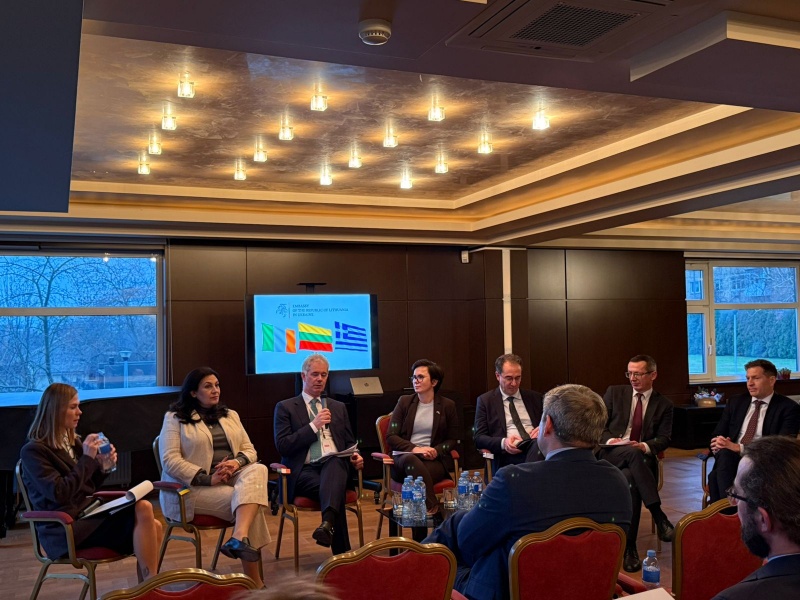
Chair of the Verkhovna Rada Committee on Ukraine’s Integration into the EU Ivanna Klympush-Tsintsadze took part in a discussion on the future trio of Presidencies of the Council of the EU: Lithuania, Ireland, and Greece. The event was organised by the Embassy of Lithuania in Ukraine. Participants discussed how the trio of countries that will soon hold the Council Presidency can best support Ukraine’s path to EU membership, strengthen regional resilience, and advance shared priorities related to European integration, reforms, and post-war recovery.
In her remarks, Ivanna Klympush-Tsintsadze emphasised the need for both speed and quality in Ukraine’s European integration process. According to her, these two components should not be mutually exclusive, either for Ukraine or within the European Union itself.
She noted that following Russia’s full-scale invasion of Ukraine, the European Union underwent a tectonic shift in its policies, as within a few months it became clear that EU enlargement is a matter of the Union’s ability to act as a global geopolitical player. “It was not only about opening the door to Ukraine. It also gave an additional impetus to renewing the European Union itself and restored momentum for the countries of the Western Balkans,” Ivanna Klympush-Tsintsadze said.
However, she added that the EU has recently lost some speed and momentum in finding solutions. “We have lost the dynamics of internal change in the EU. I no longer hear within the Union the same sense of urgency about advancing broader reform processes in parallel with internal changes in each candidate country. That is why I believe the trio of Presidencies of Lithuania, Ireland, and Greece could restore urgency and provide new momentum to this process,” the Chair of the Committee said.
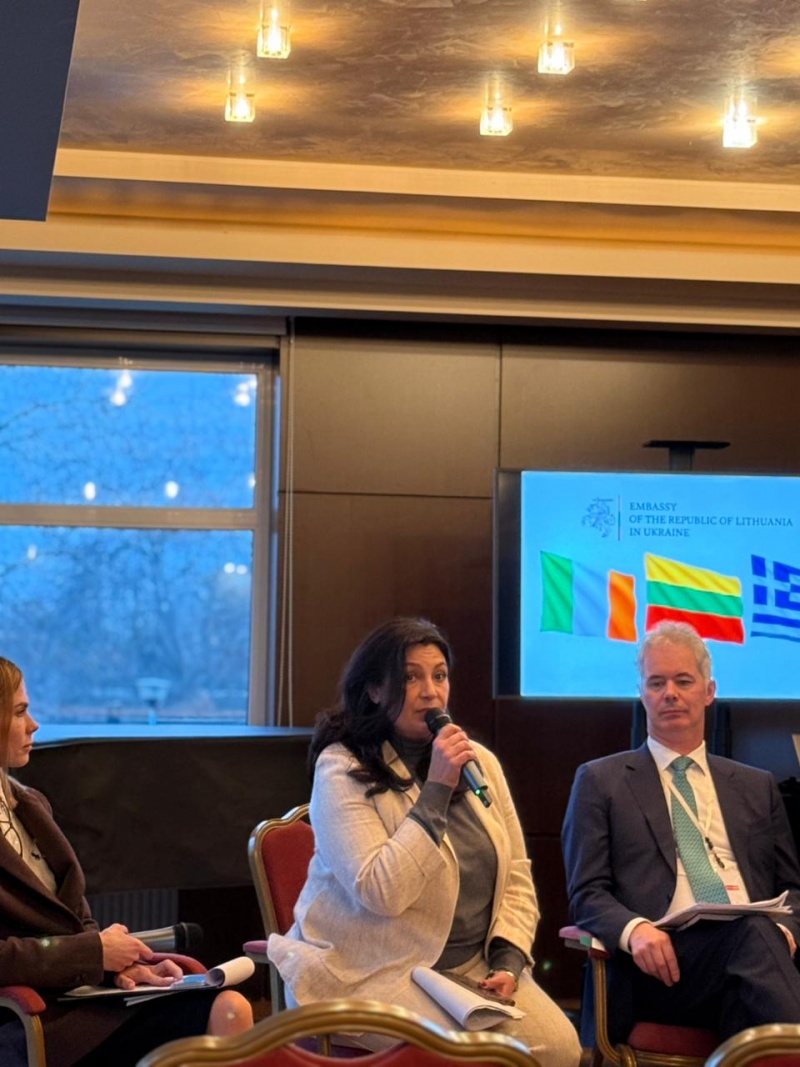
She believes EU enlargement should be not only a strategic objective but also a practical, operational process that ensures an effective, well-resourced enlargement rooted in democracy and merit. This should be accompanied by a set of new instruments to help candidate countries succeed in the EU accession process. “This also concerns readiness to find solutions on introducing qualified majority voting, identifying more effective decision-making mechanisms in general, and reviewing certain policies, including the Common Agricultural Policy, which will create many challenges in the future. These policies need to be reviewed regardless of when and how Ukraine joins the EU,” Ivanna Klympush-Tsintsadze is convinced.
Summing up, the Chair of the Committee noted that the experience of the trio of Presidencies Lithuania, Ireland, and Greece is important in finding answers to the challenges ahead: “The trio represents different parts of Europe and has unique experience of how countries transformed during EU accession and what changes it brought. So perhaps they could offer answers to those questions that, unless resolved, will prevent Ukraine or any other country from joining the EU.”
Ivanna Klympush-Tsintsadze also stressed that reforms within the EU and reforms in candidate countries must take place simultaneously. “This should not be a precondition, it must be a parallel process: we do our work, and you must be ready at the moment when that work is completed,” she said.
In her remarks, Ivanna Klympush-Tsintsadze emphasised the need for both speed and quality in Ukraine’s European integration process. According to her, these two components should not be mutually exclusive, either for Ukraine or within the European Union itself.
She noted that following Russia’s full-scale invasion of Ukraine, the European Union underwent a tectonic shift in its policies, as within a few months it became clear that EU enlargement is a matter of the Union’s ability to act as a global geopolitical player. “It was not only about opening the door to Ukraine. It also gave an additional impetus to renewing the European Union itself and restored momentum for the countries of the Western Balkans,” Ivanna Klympush-Tsintsadze said.
However, she added that the EU has recently lost some speed and momentum in finding solutions. “We have lost the dynamics of internal change in the EU. I no longer hear within the Union the same sense of urgency about advancing broader reform processes in parallel with internal changes in each candidate country. That is why I believe the trio of Presidencies of Lithuania, Ireland, and Greece could restore urgency and provide new momentum to this process,” the Chair of the Committee said.
She believes EU enlargement should be not only a strategic objective but also a practical, operational process that ensures an effective, well-resourced enlargement rooted in democracy and merit. This should be accompanied by a set of new instruments to help candidate countries succeed in the EU accession process. “This also concerns readiness to find solutions on introducing qualified majority voting, identifying more effective decision-making mechanisms in general, and reviewing certain policies, including the Common Agricultural Policy, which will create many challenges in the future. These policies need to be reviewed regardless of when and how Ukraine joins the EU,” Ivanna Klympush-Tsintsadze is convinced.
Summing up, the Chair of the Committee noted that the experience of the trio of Presidencies Lithuania, Ireland, and Greece is important in finding answers to the challenges ahead: “The trio represents different parts of Europe and has unique experience of how countries transformed during EU accession and what changes it brought. So perhaps they could offer answers to those questions that, unless resolved, will prevent Ukraine or any other country from joining the EU.”
Ivanna Klympush-Tsintsadze also stressed that reforms within the EU and reforms in candidate countries must take place simultaneously. “This should not be a precondition, it must be a parallel process: we do our work, and you must be ready at the moment when that work is completed,” she said.
More posts by topic
“News”
16 September 2026 12:00
20 April 2026 10:15
16 April 2026 13:30
09 April 2026 11:01
07 April 2026 11:34
24 February 2026 10:38
19 February 2026 10:33
11 February 2026 10:31
09 February 2026 10:29
06 February 2026 10:25