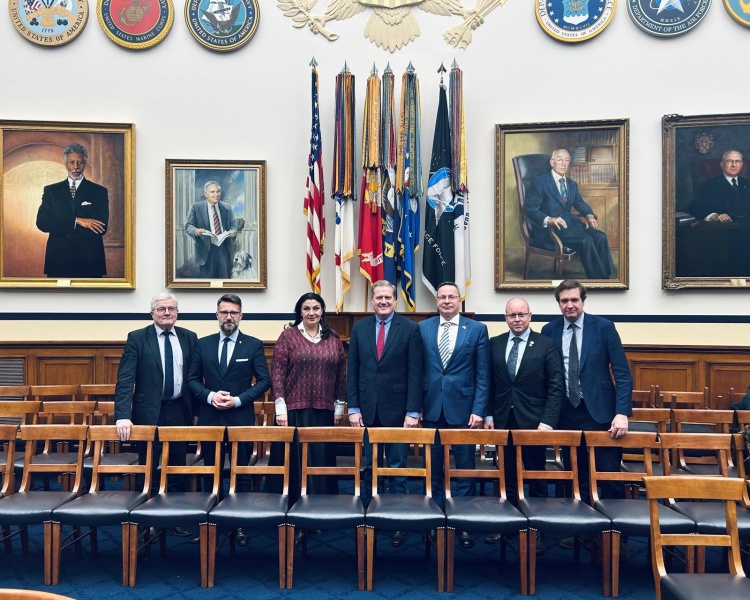
The Chair of the Verkhovna Rada Committee on Ukraine’s Integration into the EU, Ivanna Klympush-Tsintsadze, visited the United States on a working advocacy mission focused on sustaining support for Ukraine. She worked together with colleagues from the parliamentary network United4Ukraine representing Lithuania, Poland, Sweden, Spain, Finland, and Germany.
As part of the United4Ukraine delegation, Ivanna Klympush-Tsintsadze met with analysts at the Atlantic Council and the Heritage Foundation, representatives of the U.S. Department of State, and the Ambassadors of Ukraine, Poland, Lithuania, and the European Union to the United States. The delegation also engaged with media outlets and several Republican Members of Congress, including Michael Turner and Don Bacon.
“In every audience and meeting, we reminded our counterparts that Ukrainians live every day under extraordinary pressure and in conditions that are difficult to imagine from the outside. A winter under constant shelling. The systematic destruction by Russia of our energy infrastructure. Electricity, water, heating — unavailable to hundreds of thousands of households in Kyiv and across the country. This is not merely the ‘background of war’ but a deliberate ‘negotiation tactic’ of the Russian Federation,” the Chair stated.
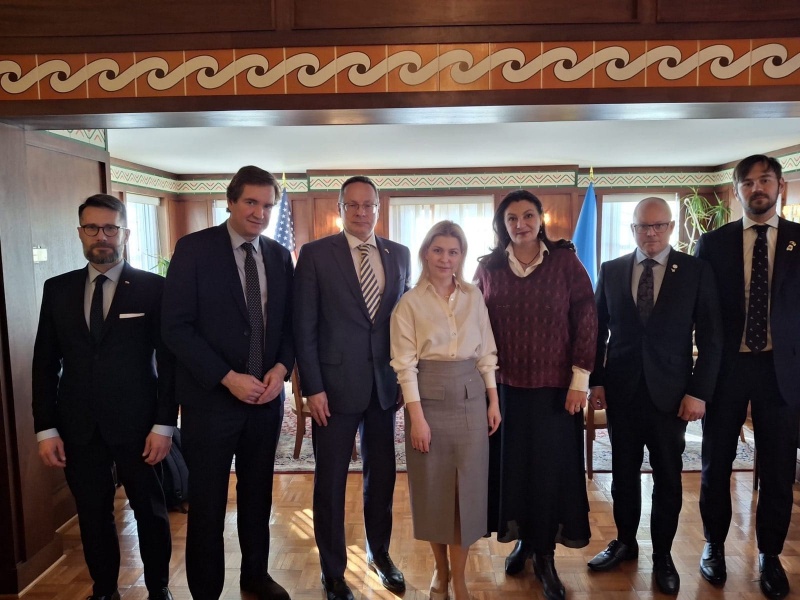
She expressed hope that the U.S. Congress will continue to play an important role and that the Ukrainian voice, strengthened by the position and actions of European partners, will be heard and taken into account. “During our meetings, we explained that Russia is not as strong as it seeks to appear. Its so-called ‘victorious narrative’ is a tool of pressure and intimidation — one the world must stop believing in and amplifying,” Ivanna Klympush-Tsintsadze said.
According to her, any discussions about security are meaningful only if real security guarantees are legally binding. “In this context, we raised the need for the U.S. Senate to ratify the guarantees that may be agreed at the bilateral level with Ukraine. Otherwise, they would amount to political promises without real protection,” she stressed.
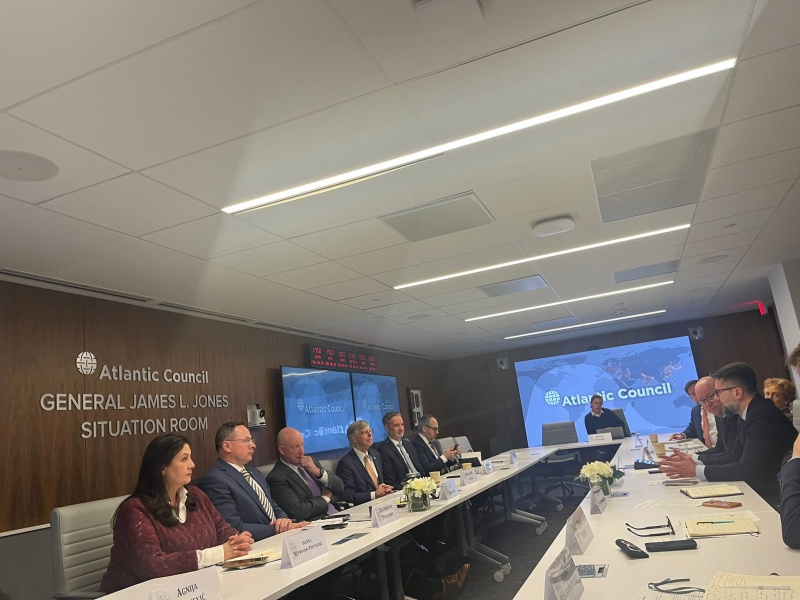
Despite all challenges, NATO remains, in her view, the most cost-effective and reliable guarantee of peace and of preventing Russia from attempting further aggression — against Ukraine or against Allied states. “Russia cannot be persuaded. It can only be compelled to peace. That is why we emphasized the need to strengthen sanctions and apply real, not symbolic, pressure on the aggressor. Through joint efforts, sustained pressure, and support for Ukraine’s self-defence, we can achieve a result where Russia ceases to pose a threat to Ukraine, to Europe, and to the United States. This requires unity, determination, and systematic daily work,” the Chair of the Committee concluded.
As part of the United4Ukraine delegation, Ivanna Klympush-Tsintsadze met with analysts at the Atlantic Council and the Heritage Foundation, representatives of the U.S. Department of State, and the Ambassadors of Ukraine, Poland, Lithuania, and the European Union to the United States. The delegation also engaged with media outlets and several Republican Members of Congress, including Michael Turner and Don Bacon.
“In every audience and meeting, we reminded our counterparts that Ukrainians live every day under extraordinary pressure and in conditions that are difficult to imagine from the outside. A winter under constant shelling. The systematic destruction by Russia of our energy infrastructure. Electricity, water, heating — unavailable to hundreds of thousands of households in Kyiv and across the country. This is not merely the ‘background of war’ but a deliberate ‘negotiation tactic’ of the Russian Federation,” the Chair stated.
She expressed hope that the U.S. Congress will continue to play an important role and that the Ukrainian voice, strengthened by the position and actions of European partners, will be heard and taken into account. “During our meetings, we explained that Russia is not as strong as it seeks to appear. Its so-called ‘victorious narrative’ is a tool of pressure and intimidation — one the world must stop believing in and amplifying,” Ivanna Klympush-Tsintsadze said.
According to her, any discussions about security are meaningful only if real security guarantees are legally binding. “In this context, we raised the need for the U.S. Senate to ratify the guarantees that may be agreed at the bilateral level with Ukraine. Otherwise, they would amount to political promises without real protection,” she stressed.
Despite all challenges, NATO remains, in her view, the most cost-effective and reliable guarantee of peace and of preventing Russia from attempting further aggression — against Ukraine or against Allied states. “Russia cannot be persuaded. It can only be compelled to peace. That is why we emphasized the need to strengthen sanctions and apply real, not symbolic, pressure on the aggressor. Through joint efforts, sustained pressure, and support for Ukraine’s self-defence, we can achieve a result where Russia ceases to pose a threat to Ukraine, to Europe, and to the United States. This requires unity, determination, and systematic daily work,” the Chair of the Committee concluded.
More posts by topic
“News”
16 September 2026 12:00
20 April 2026 10:15
16 April 2026 13:30
09 April 2026 11:01
07 April 2026 11:34
24 February 2026 10:38
19 February 2026 10:33
11 February 2026 10:31
09 February 2026 10:29
06 February 2026 10:25