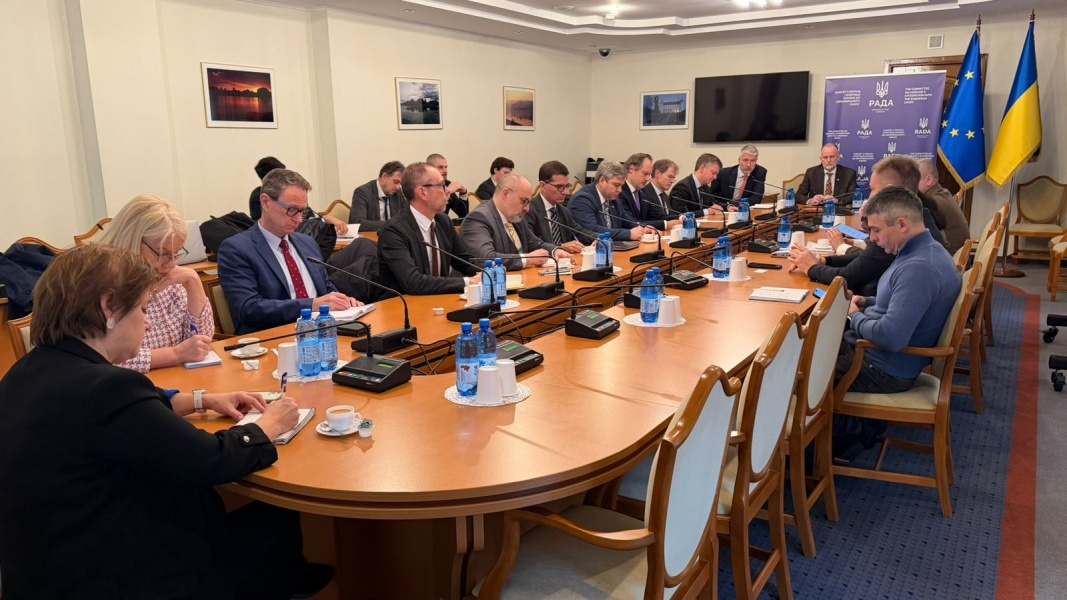
Members of the Verkhovna Rada Committee on Ukraine’s Integration into the European Union met with Directors of Eastern Europe Departments of the Ministries of Foreign Affairs of the Nordic-Baltic Eight countries. The Nordic-Baltic Eight (NB8) is a regional cooperation format that includes Denmark, Estonia, Finland, Iceland, Latvia, Lithuania, Norway, and Sweden. These countries currently demonstrate leadership in supporting Ukraine.
The Chair of the Committee, Ivanna Klympush-Tsintsadze, thanked the delegation for their visit to Ukraine. She noted the delegation’s engagement with representatives of different political forces, emphasizing the importance of broad-based dialogue. “I am very grateful that you find the opportunity to meet with representatives of different political forces. It is important to receive feedback from all political parties and to communicate your priorities to a broader audience,” Ivanna Klympush-Tsintsadze said.
The parties discussed key challenges Ukraine is facing during the war. The Chair of the Committee noted that the Baltic and Nordic countries have a clear understanding of these challenges and of the fact that Ukraine is fighting not only for its own freedom and security, but also for the security of the entire continent. She called for continued engagement with their societies and with other countries to convey the truth about Ukraine and the need for joint, coordinated action in countering Russian aggression.
Ivanna Klympush-Tsintsadze cautioned against placing high expectations on the negotiations currently being conducted between the United States and the Russian Federation. In her view, these talks are disorienting and create misleading expectations of a quick end to the war. “There are no signs that Russia has changed its goals. Nor is there any genuine interest on Russia’s part in real negotiations. Russia has managed to draw everyone into a trap by creating the illusion of a negotiation plan that everyone is now discussing and trying to react to,” the Chair of the Committee said.
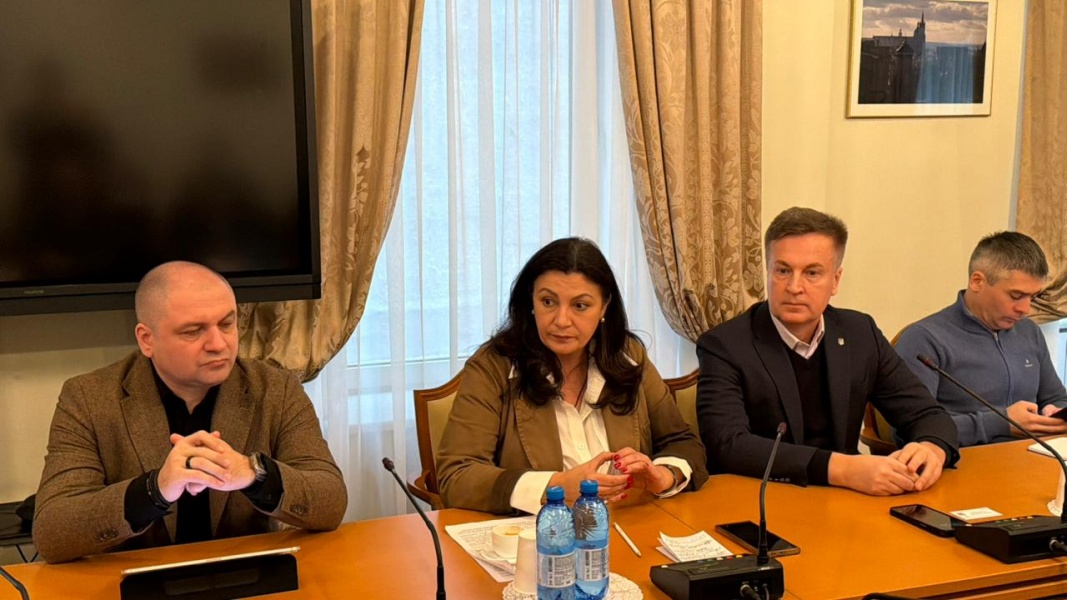
She expressed her conviction that through its recent maneuvering around negotiations, Russia is attempting to divert Europe from adopting a reparations loan for Ukraine funded by frozen Russian assets, as well as to weaken sanctions against itself. “Russia has managed to convince the United States that it is winning, but we must not forget that the outcome depends on the joint efforts of allies. Russia cannot be persuaded into peace. It can only be forced,” Ivanna Klympush-Tsintsadze stressed. The Chair of the Committee called for efforts to ensure that Europe adopts a reparations loan for Ukraine as soon as possible, while simultaneously establishing a clear and transparent mechanism for oversight of the use of these funds. In her view, this would help restore the trust of Western partners in Ukraine following corruption scandals. It is equally important to cleanse sectors where corruption has been exposed and to guarantee the restoration of a system of checks and balances in the country. Members of the Committee also urged the delegation’s representatives to work with their governments and European institutions to strengthen cooperation between law enforcement and anti-corruption bodies of Ukraine and EU member states in order to identify and return funds stolen from Ukraine as a result of corruption.
Special attention was also paid to the possibility of holding elections. Members of the Committee emphasized that under wartime conditions, the preparation and conduct of elections are impossible both from a legal and a security perspective. Ivanna Klympush-Tsintsadze noted that Ukrainians deeply value their freedom and their right to influence those in power and are convinced that elections are a cornerstone democratic procedure. However, for elections to be truly free and democratic, appropriate conditions must be created, which is impossible under martial law.
The discussion also addressed Ukraine’s European integration and the challenges related to the blocking of the opening of the first negotiation cluster. The Chair of the Committee stated that the Orbán government is harming not only Ukraine’s European integration path. “It undermines European unity, solidarity, and the fundamental principles on which the EU is built,” Ivanna Klympush-Tsintsadze said. She added that unblocking the opening of negotiations under the main clusters would also guarantee the irreversibility of reforms in Ukraine, while close attention from European partners to developments in Ukraine would serve as an additional safeguard for preserving democracy.
The Chair of the Committee, Ivanna Klympush-Tsintsadze, thanked the delegation for their visit to Ukraine. She noted the delegation’s engagement with representatives of different political forces, emphasizing the importance of broad-based dialogue. “I am very grateful that you find the opportunity to meet with representatives of different political forces. It is important to receive feedback from all political parties and to communicate your priorities to a broader audience,” Ivanna Klympush-Tsintsadze said.
The parties discussed key challenges Ukraine is facing during the war. The Chair of the Committee noted that the Baltic and Nordic countries have a clear understanding of these challenges and of the fact that Ukraine is fighting not only for its own freedom and security, but also for the security of the entire continent. She called for continued engagement with their societies and with other countries to convey the truth about Ukraine and the need for joint, coordinated action in countering Russian aggression.
Ivanna Klympush-Tsintsadze cautioned against placing high expectations on the negotiations currently being conducted between the United States and the Russian Federation. In her view, these talks are disorienting and create misleading expectations of a quick end to the war. “There are no signs that Russia has changed its goals. Nor is there any genuine interest on Russia’s part in real negotiations. Russia has managed to draw everyone into a trap by creating the illusion of a negotiation plan that everyone is now discussing and trying to react to,” the Chair of the Committee said.
She expressed her conviction that through its recent maneuvering around negotiations, Russia is attempting to divert Europe from adopting a reparations loan for Ukraine funded by frozen Russian assets, as well as to weaken sanctions against itself. “Russia has managed to convince the United States that it is winning, but we must not forget that the outcome depends on the joint efforts of allies. Russia cannot be persuaded into peace. It can only be forced,” Ivanna Klympush-Tsintsadze stressed. The Chair of the Committee called for efforts to ensure that Europe adopts a reparations loan for Ukraine as soon as possible, while simultaneously establishing a clear and transparent mechanism for oversight of the use of these funds. In her view, this would help restore the trust of Western partners in Ukraine following corruption scandals. It is equally important to cleanse sectors where corruption has been exposed and to guarantee the restoration of a system of checks and balances in the country. Members of the Committee also urged the delegation’s representatives to work with their governments and European institutions to strengthen cooperation between law enforcement and anti-corruption bodies of Ukraine and EU member states in order to identify and return funds stolen from Ukraine as a result of corruption.
Special attention was also paid to the possibility of holding elections. Members of the Committee emphasized that under wartime conditions, the preparation and conduct of elections are impossible both from a legal and a security perspective. Ivanna Klympush-Tsintsadze noted that Ukrainians deeply value their freedom and their right to influence those in power and are convinced that elections are a cornerstone democratic procedure. However, for elections to be truly free and democratic, appropriate conditions must be created, which is impossible under martial law.
The discussion also addressed Ukraine’s European integration and the challenges related to the blocking of the opening of the first negotiation cluster. The Chair of the Committee stated that the Orbán government is harming not only Ukraine’s European integration path. “It undermines European unity, solidarity, and the fundamental principles on which the EU is built,” Ivanna Klympush-Tsintsadze said. She added that unblocking the opening of negotiations under the main clusters would also guarantee the irreversibility of reforms in Ukraine, while close attention from European partners to developments in Ukraine would serve as an additional safeguard for preserving democracy.
More posts by topic
“News”
16 September 2026 12:00
20 April 2026 10:15
16 April 2026 13:30
09 April 2026 11:01
07 April 2026 11:34
24 February 2026 10:38
19 February 2026 10:33
11 February 2026 10:31
09 February 2026 10:29
06 February 2026 10:25