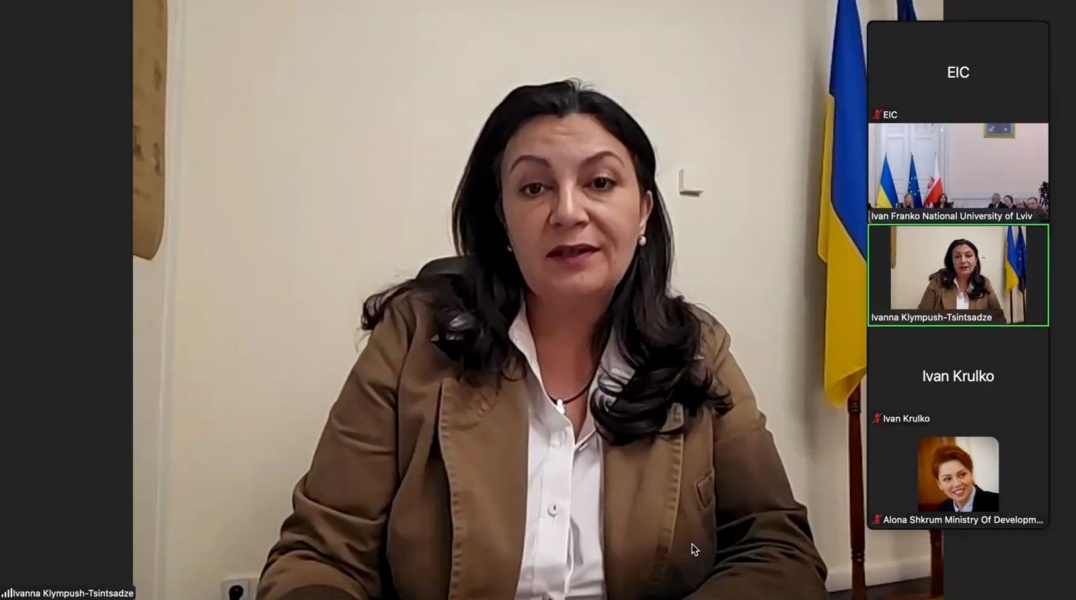
Chair of the Verkhovna Rada Committee on Ukraine’s Integration into the EU Ivanna Klympush-Tsintsadze took part in the work of the 14th Session of the Parliamentary Assembly of Ukraine and the Republic of Poland. She thanked Poland for its assistance to Ukraine in the fight against the Russian aggressor, for supporting Ukraine’s path towards European and Euro-Atlantic integration, and for the open hearts and doors Poland opened to Ukrainians at the start of the full-scale invasion. “I am convinced that it is precisely on this openness, willingness for dialogue, and human interaction that we must continue to build our common interests, shared agreements, and the ability to achieve shared success,” the Chair of the Committee said.
Ivanna Klympush-Tsintsadze stressed that for Ukraine, European integration is a guarantee of security, resilience, and stability. “But it is also about real living standards for every citizen, and a symbol, a promise of the future for people living in war,” she said.
The Chair of the Committee recalled that Poland has always been one of the key promoters of Ukraine’s membership in the EU and NATO. “I would very much like Poland’s voice to remain just as loud and persuasive,” she said.
According to Ivanna Klympush-Tsintsadze, Ukraine greatly appreciates that during Poland’s Presidency of the EU, the issues of EU enlargement and security were prioritised, which are important for Poland, Ukraine, and the entire region. Unfortunately, during the Polish Presidency it was not possible to unblock the opening of the first negotiation cluster for Ukraine. “Due to the artificial veto of the Hungarian Prime Minister. And this veto, unfortunately, continues. It is critically important for us that Poland maintains an active position in finding an instrument and mechanism to bypass, stop, or lift this veto. In our view, it has nothing to do with solidarity, the EU’s shared values, or the real interests of the European Union. It is driven by narrow party and narrow national interests of a particular political force and, unfortunately, also plays into the hands of the aggressor state,” the Chair of the Committee noted.
According to the European Commission’s assessment, Ukraine is currently ready at least to open three clusters. Ivanna Klympush-Tsintsadze is convinced it is important to preserve the momentum of European integration both from Kyiv’s side and from Brussels. Opening the first negotiation cluster, she said, would also bring closer attention from European partners to the processes taking place in Ukraine.
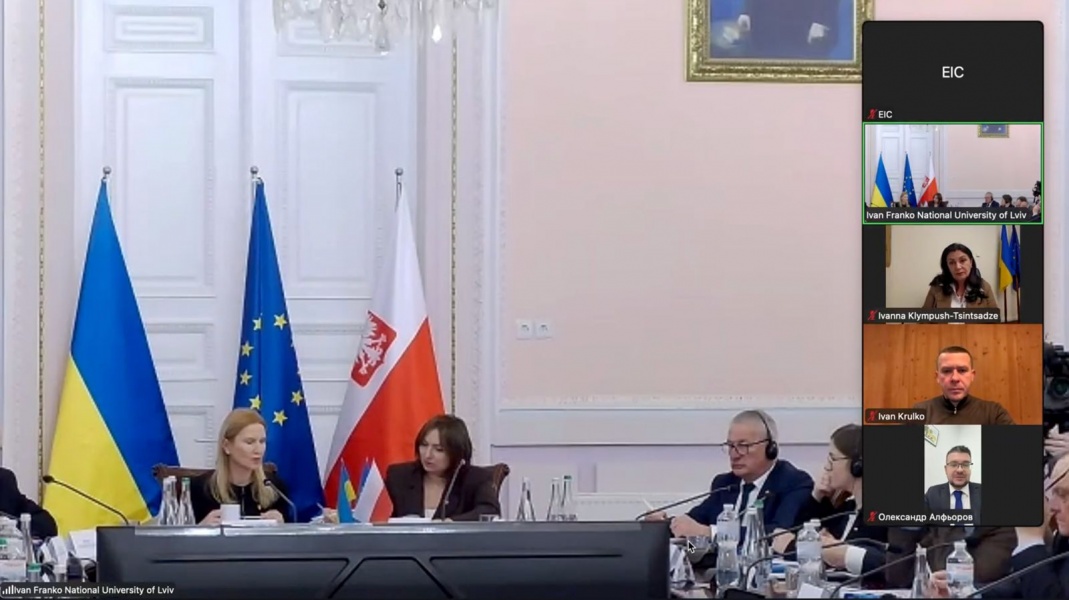
The Chair of the Committee also outlined the economic and security dimensions of Ukraine’s European integration. She noted that this process is beneficial not only for Ukraine but also for European partners. “We are certainly not only asking, we are also donors of know-how, knowledge, experience, and skills that we can share with our partners,” Ivanna Klympush-Tsintsadze said.
She added that there are also difficult areas in which Ukrainians and Poles may compete, such as agriculture, and this should be discussed openly. “I am convinced we are capable of finding ways to act through joint ventures, joint processing, and by identifying those points of contact that will allow us to become serious and successful players together,” the Chair of the Committee said.
On historical challenges, she called for an honest dialogue. “The Ukrainian state, and I say this as a representative of the opposition, is now treating the bilateral historical dialogue very responsibly. I would like us to see as few manipulations as possible and to have less distortion and more truth in our educational books, both in Ukraine and in Poland. Perhaps it is a difficult truth for both countries about our shared historical past, but one that would allow us to build a more successful common future,” Ivanna Klympush-Tsintsadze said.
The Chair of the Committee also urged Poland to lift restrictions related to the new trade rules that replaced autonomous trade preferences for Ukraine. “So that we can continue a path of trade that will enrich both our peoples, our economies, and our shared success,” the Chair of the Verkhovna Rada Committee on Ukraine’s Integration into the EU concluded.
Ivanna Klympush-Tsintsadze stressed that for Ukraine, European integration is a guarantee of security, resilience, and stability. “But it is also about real living standards for every citizen, and a symbol, a promise of the future for people living in war,” she said.
The Chair of the Committee recalled that Poland has always been one of the key promoters of Ukraine’s membership in the EU and NATO. “I would very much like Poland’s voice to remain just as loud and persuasive,” she said.
According to Ivanna Klympush-Tsintsadze, Ukraine greatly appreciates that during Poland’s Presidency of the EU, the issues of EU enlargement and security were prioritised, which are important for Poland, Ukraine, and the entire region. Unfortunately, during the Polish Presidency it was not possible to unblock the opening of the first negotiation cluster for Ukraine. “Due to the artificial veto of the Hungarian Prime Minister. And this veto, unfortunately, continues. It is critically important for us that Poland maintains an active position in finding an instrument and mechanism to bypass, stop, or lift this veto. In our view, it has nothing to do with solidarity, the EU’s shared values, or the real interests of the European Union. It is driven by narrow party and narrow national interests of a particular political force and, unfortunately, also plays into the hands of the aggressor state,” the Chair of the Committee noted.
According to the European Commission’s assessment, Ukraine is currently ready at least to open three clusters. Ivanna Klympush-Tsintsadze is convinced it is important to preserve the momentum of European integration both from Kyiv’s side and from Brussels. Opening the first negotiation cluster, she said, would also bring closer attention from European partners to the processes taking place in Ukraine.
The Chair of the Committee also outlined the economic and security dimensions of Ukraine’s European integration. She noted that this process is beneficial not only for Ukraine but also for European partners. “We are certainly not only asking, we are also donors of know-how, knowledge, experience, and skills that we can share with our partners,” Ivanna Klympush-Tsintsadze said.
She added that there are also difficult areas in which Ukrainians and Poles may compete, such as agriculture, and this should be discussed openly. “I am convinced we are capable of finding ways to act through joint ventures, joint processing, and by identifying those points of contact that will allow us to become serious and successful players together,” the Chair of the Committee said.
On historical challenges, she called for an honest dialogue. “The Ukrainian state, and I say this as a representative of the opposition, is now treating the bilateral historical dialogue very responsibly. I would like us to see as few manipulations as possible and to have less distortion and more truth in our educational books, both in Ukraine and in Poland. Perhaps it is a difficult truth for both countries about our shared historical past, but one that would allow us to build a more successful common future,” Ivanna Klympush-Tsintsadze said.
The Chair of the Committee also urged Poland to lift restrictions related to the new trade rules that replaced autonomous trade preferences for Ukraine. “So that we can continue a path of trade that will enrich both our peoples, our economies, and our shared success,” the Chair of the Verkhovna Rada Committee on Ukraine’s Integration into the EU concluded.
More posts by topic
“News”
16 September 2026 12:00
20 April 2026 10:15
16 April 2026 13:30
09 April 2026 11:01
07 April 2026 11:34
24 February 2026 10:38
19 February 2026 10:33
11 February 2026 10:31
09 February 2026 10:29
06 February 2026 10:25