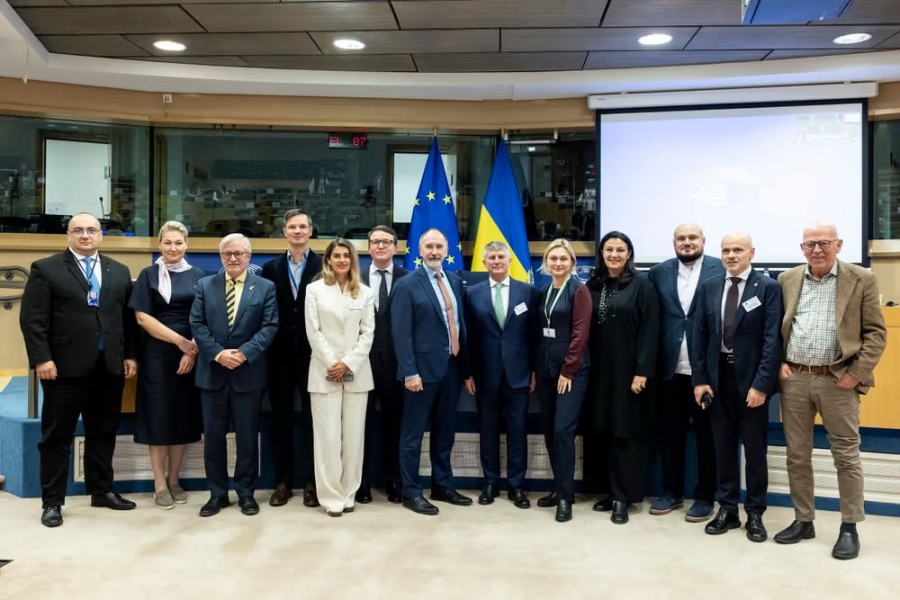
On 10–11 November 2025, Brussels hosted the 17th meeting of the EU–Ukraine Parliamentary Association Committee (PAC). Members of the Verkhovna Rada of Ukraine and Members of the European Parliament took part in the session.
During the first working session, participants discussed the EU’s support for Ukraine and bilateral relations in the context of countering Russia’s military aggression, holding perpetrators accountable for the crime of aggression, the EU’s role in curbing Russia’s war economy, as well as Ukraine’s recovery and reconstruction.
The meeting opened with an address by Ukrainian veteran Andrii Madzharov, who reached Brussels on foot, telling Europeans along the way the truth about Russia’s war against Ukraine. Calling on MEPs to strengthen assistance to Ukraine, Madzharov stressed that the current war is not only a war of Russia against Ukraine. It is a war of democracy against dictatorship, of good against evil, of light against darkness. “By consolidating your strength and political will, you can save not only lives but also the peace you currently have, which may be endangered if Ukraine falls. I ask you not to stop your assistance but to reinforce it as much as possible,” Andrii Madzharov urged.
The participants also heard from Dmytro Khyliuk, a Ukrainian who had been abducted by Russian forces from his home during the occupation of Kyiv region and held in inhumane conditions until 24 August this year, when he was finally able to return home as part of a prisoner exchange. Speaking in the European Parliament, Dmytro Khyliuk called on its members to introduce personal sanctions against the Russian torturers whose identities have already been established. “I call on the European Parliament to contact Ukrainian law enforcement and impose personal sanctions on the leadership of the colonies who decide on the torture of Ukrainian prisoners,” the former detainee said.
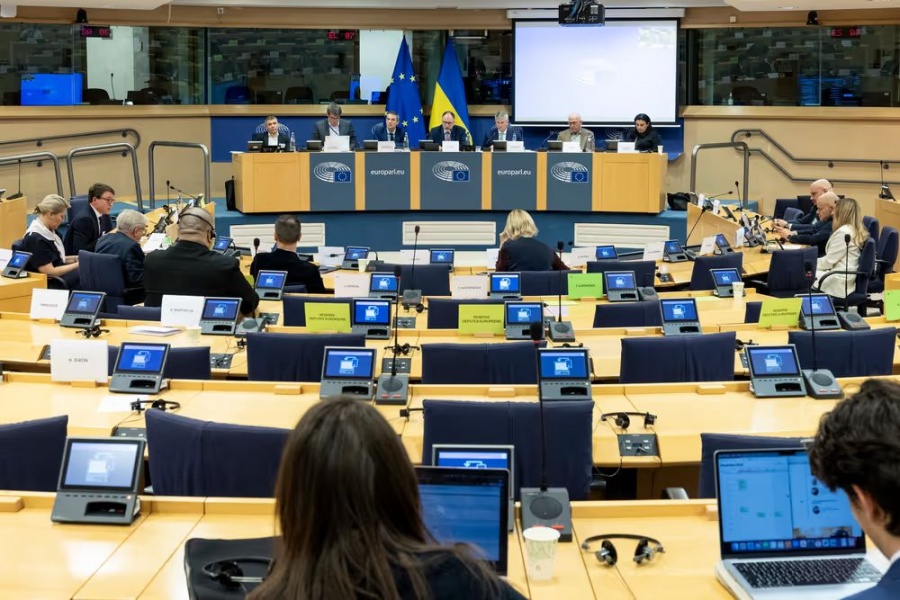
PAC members discussed sanction policy and economic pressure on Russia, the use of frozen Russian assets to establish a Reparation Fund, as well as ways to ensure sustainable financing for Ukraine.
Vadym Halaichuk, Co-Chair of the PAC from the Ukrainian side, emphasised that sustained international support is critically important for Ukraine. “This is a war of attrition, which means that the economic component is extremely important,” Vadym Halaichuk stressed. He expressed confidence that, together with allies whose economies are many times stronger than Russia’s, Ukraine can withstand Russia and continue applying economic pressure on the aggressor. But the key factor must be predictable and stable financing from partners. The PAC Co-Chair also insisted on the need to continue monitoring evasion of the sanctions already imposed for Russian aggression, and to work to ensure that not only the profits from frozen Russian assets but the assets themselves are used for the benefit of Ukraine.
The second day of the meeting was devoted to the parliamentary dimension of Ukraine’s EU integration process. Participants reviewed progress in aligning Ukraine’s legislation with EU law and the status of reform implementation.
Ivanna Klympush-Tsintsadze, First Deputy Chair of the Ukrainian part of the PAC, underlined that the Armed Forces of Ukraine today are defending not only Ukraine’s sovereignty and independence, but also serving as a shield for the European Union. “Russia has sharply increased the scale, intensity, and frequency of its attacks across Ukraine, targeting civilian sites and civilian infrastructure. This means that we must restore a sense of urgency in every action taken by Ukraine’s European partners,” she said. Ivanna Klympush-Tsintsadze stressed that despite the war, Ukraine must continue working on reforms to achieve its strategic goal, enshrined in the Constitution of Ukraine, of EU membership. In this context, she highlighted the essential role of the Armed Forces of Ukraine and of Ukrainian society in defending democracy. She also urged the swift opening of negotiations with the EU under the “Fundamentals” cluster, which, in her view, would ensure additional oversight, attention, and support from the EU; protect and strengthen the reform agenda in Ukraine; restore parliamentary activity and oversight of government actions; and help re-establish a healthy balance of powers in the country.
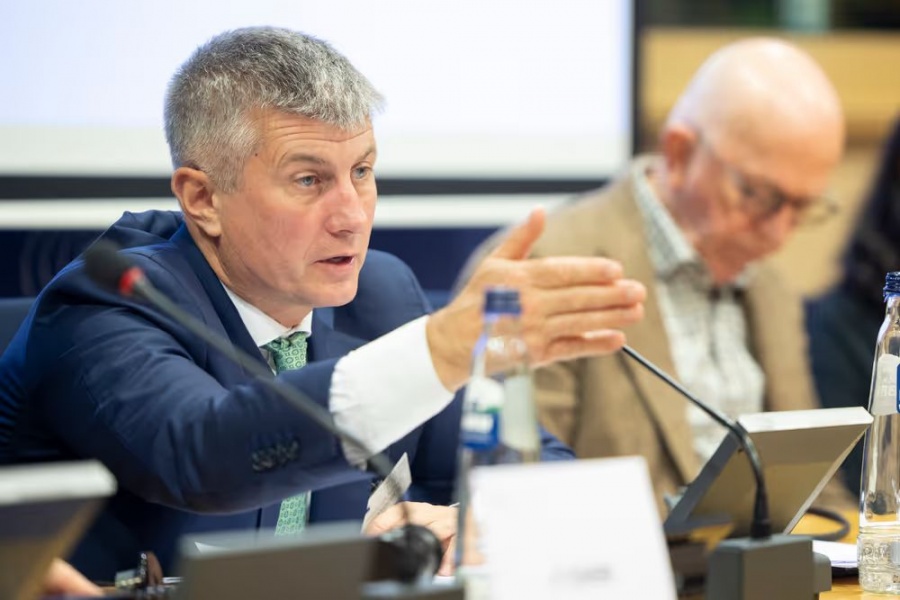
Special attention was devoted to the situation of Ukrainians residing in EU member states. The participants adopted a joint PAC statement and recommendations summarising the meeting. The document, among other things, calls on Russia to immediately cease military actions against Ukraine; condemns the executions and torture of Ukrainian prisoners of war and demands their immediate release; strongly condemns the violent acts committed by the Russian Federation and Belarus’s involvement in the abuse of Ukrainian children, including killings, forced transfers and deportations, unlawful adoptions, sexual violence and exploitation, forced Russification, and militarisation; demands the immediate end of these crimes and that Russia disclose the identities and whereabouts of all deported Ukrainian children, ensuring their well-being and safe and unconditional return; condemns the escalating deliberate Russian attacks on Ukraine’s energy sector; urges the EU and its member states to sustain and reinforce their political, financial, economic, humanitarian, military, and diplomatic support to ensure the strongest possible position for Ukraine in future peace negotiations; and welcomes progress on establishing a Special Tribunal for the crime of aggression against Ukraine.
The final document did not include amendments drawing attention to the need to lift the ban on foreign travel, including for opposition MPs, and emphasising the inadmissibility of political persecution of opponents and the parliamentary opposition. “Unfortunately, despite the fact that these amendments have repeatedly appeared in resolutions of the European Parliament, they were, in effect, removed by the Ukrainian delegation,” said Ivanna Klympush-Tsintsadze.
During the first working session, participants discussed the EU’s support for Ukraine and bilateral relations in the context of countering Russia’s military aggression, holding perpetrators accountable for the crime of aggression, the EU’s role in curbing Russia’s war economy, as well as Ukraine’s recovery and reconstruction.
The meeting opened with an address by Ukrainian veteran Andrii Madzharov, who reached Brussels on foot, telling Europeans along the way the truth about Russia’s war against Ukraine. Calling on MEPs to strengthen assistance to Ukraine, Madzharov stressed that the current war is not only a war of Russia against Ukraine. It is a war of democracy against dictatorship, of good against evil, of light against darkness. “By consolidating your strength and political will, you can save not only lives but also the peace you currently have, which may be endangered if Ukraine falls. I ask you not to stop your assistance but to reinforce it as much as possible,” Andrii Madzharov urged.
The participants also heard from Dmytro Khyliuk, a Ukrainian who had been abducted by Russian forces from his home during the occupation of Kyiv region and held in inhumane conditions until 24 August this year, when he was finally able to return home as part of a prisoner exchange. Speaking in the European Parliament, Dmytro Khyliuk called on its members to introduce personal sanctions against the Russian torturers whose identities have already been established. “I call on the European Parliament to contact Ukrainian law enforcement and impose personal sanctions on the leadership of the colonies who decide on the torture of Ukrainian prisoners,” the former detainee said.
PAC members discussed sanction policy and economic pressure on Russia, the use of frozen Russian assets to establish a Reparation Fund, as well as ways to ensure sustainable financing for Ukraine.
Vadym Halaichuk, Co-Chair of the PAC from the Ukrainian side, emphasised that sustained international support is critically important for Ukraine. “This is a war of attrition, which means that the economic component is extremely important,” Vadym Halaichuk stressed. He expressed confidence that, together with allies whose economies are many times stronger than Russia’s, Ukraine can withstand Russia and continue applying economic pressure on the aggressor. But the key factor must be predictable and stable financing from partners. The PAC Co-Chair also insisted on the need to continue monitoring evasion of the sanctions already imposed for Russian aggression, and to work to ensure that not only the profits from frozen Russian assets but the assets themselves are used for the benefit of Ukraine.
The second day of the meeting was devoted to the parliamentary dimension of Ukraine’s EU integration process. Participants reviewed progress in aligning Ukraine’s legislation with EU law and the status of reform implementation.
Ivanna Klympush-Tsintsadze, First Deputy Chair of the Ukrainian part of the PAC, underlined that the Armed Forces of Ukraine today are defending not only Ukraine’s sovereignty and independence, but also serving as a shield for the European Union. “Russia has sharply increased the scale, intensity, and frequency of its attacks across Ukraine, targeting civilian sites and civilian infrastructure. This means that we must restore a sense of urgency in every action taken by Ukraine’s European partners,” she said. Ivanna Klympush-Tsintsadze stressed that despite the war, Ukraine must continue working on reforms to achieve its strategic goal, enshrined in the Constitution of Ukraine, of EU membership. In this context, she highlighted the essential role of the Armed Forces of Ukraine and of Ukrainian society in defending democracy. She also urged the swift opening of negotiations with the EU under the “Fundamentals” cluster, which, in her view, would ensure additional oversight, attention, and support from the EU; protect and strengthen the reform agenda in Ukraine; restore parliamentary activity and oversight of government actions; and help re-establish a healthy balance of powers in the country.
Special attention was devoted to the situation of Ukrainians residing in EU member states. The participants adopted a joint PAC statement and recommendations summarising the meeting. The document, among other things, calls on Russia to immediately cease military actions against Ukraine; condemns the executions and torture of Ukrainian prisoners of war and demands their immediate release; strongly condemns the violent acts committed by the Russian Federation and Belarus’s involvement in the abuse of Ukrainian children, including killings, forced transfers and deportations, unlawful adoptions, sexual violence and exploitation, forced Russification, and militarisation; demands the immediate end of these crimes and that Russia disclose the identities and whereabouts of all deported Ukrainian children, ensuring their well-being and safe and unconditional return; condemns the escalating deliberate Russian attacks on Ukraine’s energy sector; urges the EU and its member states to sustain and reinforce their political, financial, economic, humanitarian, military, and diplomatic support to ensure the strongest possible position for Ukraine in future peace negotiations; and welcomes progress on establishing a Special Tribunal for the crime of aggression against Ukraine.
The final document did not include amendments drawing attention to the need to lift the ban on foreign travel, including for opposition MPs, and emphasising the inadmissibility of political persecution of opponents and the parliamentary opposition. “Unfortunately, despite the fact that these amendments have repeatedly appeared in resolutions of the European Parliament, they were, in effect, removed by the Ukrainian delegation,” said Ivanna Klympush-Tsintsadze.
More posts by topic
“News”
16 September 2026 12:00
20 April 2026 10:15
16 April 2026 13:30
09 April 2026 11:01
07 April 2026 11:34
24 February 2026 10:38
19 February 2026 10:33
11 February 2026 10:31
09 February 2026 10:29
06 February 2026 10:25