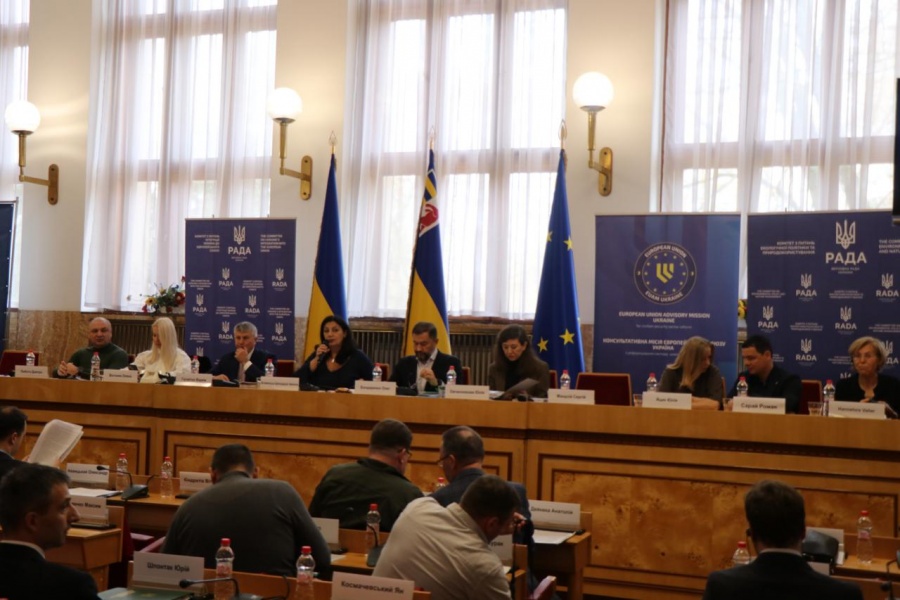
With the support of the EU Advisory Mission to Ukraine (EUAM), a joint field meeting of the Verkhovna Rada Committees on Ukraine’s Integration into the EU and on Environmental Policy and Nature Management took place in Uzhhorod. The meeting focused on the situation surrounding the construction of wind power plants in the mountainous areas of Zakarpattia, compliance with environmental legislation, and Ukraine’s international legal obligations in the context of European integration.
The session was attended by the Deputy Prime Minister for European and Euro-Atlantic Integration of Ukraine, representatives of ministries, local authorities, the VRU Committees on Law Enforcement and on Energy and Utilities, EUAM representatives, Members of the European Parliament, as well as investors and civil society organizations.
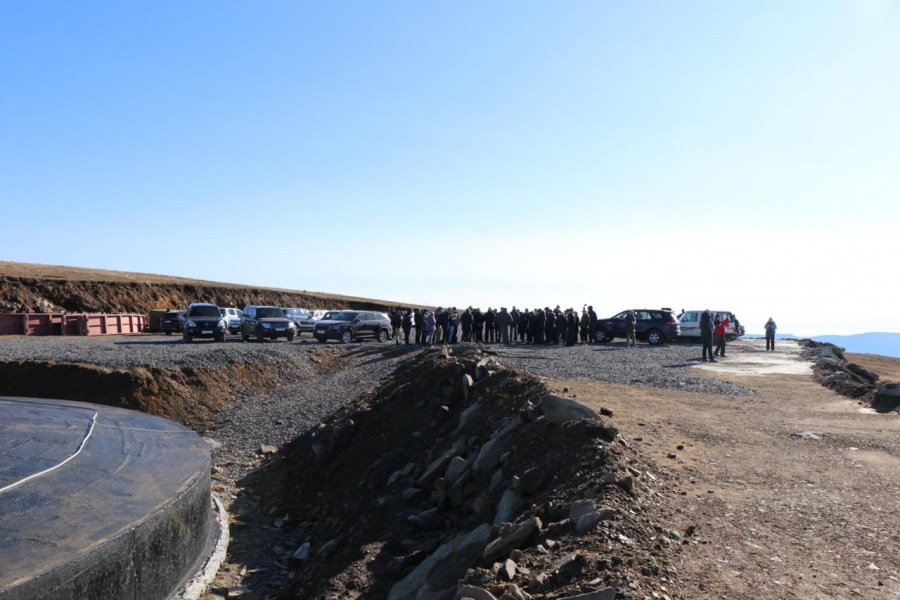
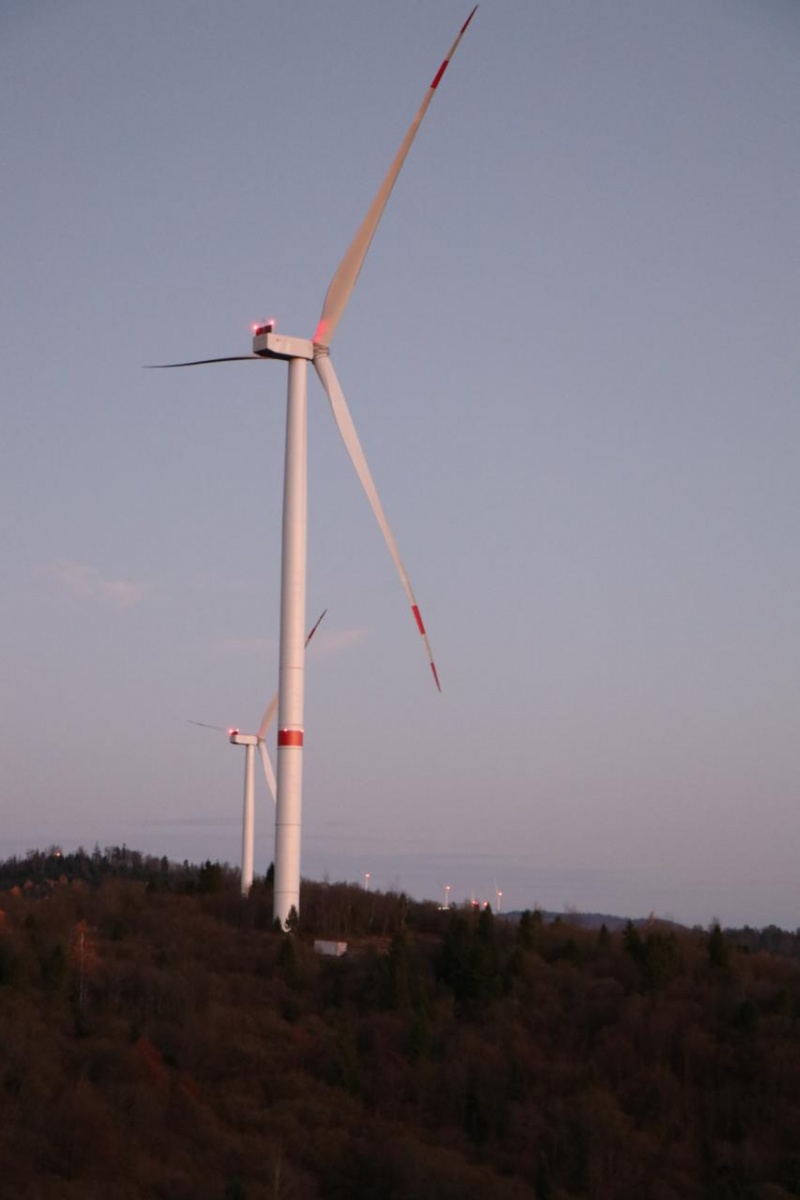
On the eve of the meeting, participants visited two sites: one where foundations for wind turbines have already been poured, and another where turbines have already been installed. The foundations at the Runa meadow were constructed without an Environmental Impact Assessment (EIA), which is required under Ukrainian law for wind power construction.
When asked how such construction was possible, the Head of the State Inspectorate for Architecture and Urban Planning of Ukraine, Oleksandr Novytskyi, explained that Ukrainian legislation currently lacks a definition of a “construction object.” The agency interprets a construction object as a “scope of works and architectural solutions,” and therefore considers foundations not to be construction objects requiring EIA. The State Environmental Inspectorate holds the same view.
In response, the Chair of the Verkhovna Rada Committee on Environmental Policy, Oleg Bondarenko, stressed that by separating permits for foundations from permits for other types of construction, the State Inspectorate for Architecture and Urban Planning “opens Pandora’s box in terms of violations of environmental protection legislation.”
According to Vladoslav Yeremenko, CEO of Wind Parks of Ukraine LLC, the construction of turbines in Zakarpattia complies with current legislation and will stimulate the region’s economic development. The investor claims that the private contractor conducted all necessary studies, the results of which allegedly show minimal environmental harm.
Kateryna Polyanska, environmental expert at the NGO “Ecology – Law – Human” (EPL), expressed a different view. Speaking about the feasibility of building wind farms in the mountains, she noted that the Carpathians make up only 4% of Ukraine’s territory, and highlands only 3–10% of the Ukrainian Carpathians. Wind turbines are being built precisely in these high-altitude areas. “These are relict post-glacial ecosystems that have formed over thousands of years. They are unique. Similar ones exist only in Scandinavia,” she explained. Environmentalists stress that wind farm construction destroys alpine meadows, soils, geological structures and highland terrain.
Oksana Stankevych-Volosianchuk, environmental expert of the NGO Ecosphere, reminded participants that the goal of the EU’s climate transition—of which Ukraine aims to be a part—is achieving climate neutrality. “Only ecosystems can absorb carbon dioxide on the planet,” she emphasized. She also cited Spain’s experience, where wind turbine construction in mountain areas led to the spread of invasive species.
“German experience shows that if there is an opportunity to build a wind turbine in a regular field, there is no need to cut down too many trees. Moreover, it is essential to preserve ecological balance—compare the environmental impact and the benefits of such projects. Even more, each case requires a detailed environmental impact assessment,” said Michael Gahler, Member of the European Parliament and EP Rapporteur on Ukraine.
“You may be offered a project that looks good on paper but cannot be implemented because of rare habitats, nesting bird species or other environmental constraints. It is important not to hide information, not to exclude environmental experts, analysts or scientists from the process. I always recommend speaking with ecologists first and then looking for a compromise. Do not exclude them, do not pressure them and do not threaten them,” stressed Viola von Cramon-Taubadel, former Member of the European Parliament and Head of the Forum for Sustainable Democracy.
Hannelore Wallier, Head of the EUAM’s Lviv Field Office, noted that every citizen wants to live in a country where the rule of law prevails. “Environmental issues must not contradict legislation. Cooperation between law enforcement bodies, other relevant state authorities and communities must be strengthened,” she said.
Summarizing the discussion, the Chair of the Committee on Ukraine’s Integration into the EU, Ivanna Klympush-Tsintsadze, emphasized that developing renewable energy capacity is extremely important, especially during wartime. At the same time, environmental protection and the sustainable development of communities cannot be neglected. Following the field meeting, MPs approved the draft decision as a basis. “Based on the information gathered here in Zakarpattia, as well as information provided by the relevant state bodies, we will arrive at a common vision for the draft decision, which we will then vote on as a whole,” the Committee Chair stated.
The session was attended by the Deputy Prime Minister for European and Euro-Atlantic Integration of Ukraine, representatives of ministries, local authorities, the VRU Committees on Law Enforcement and on Energy and Utilities, EUAM representatives, Members of the European Parliament, as well as investors and civil society organizations.
On the eve of the meeting, participants visited two sites: one where foundations for wind turbines have already been poured, and another where turbines have already been installed. The foundations at the Runa meadow were constructed without an Environmental Impact Assessment (EIA), which is required under Ukrainian law for wind power construction.
When asked how such construction was possible, the Head of the State Inspectorate for Architecture and Urban Planning of Ukraine, Oleksandr Novytskyi, explained that Ukrainian legislation currently lacks a definition of a “construction object.” The agency interprets a construction object as a “scope of works and architectural solutions,” and therefore considers foundations not to be construction objects requiring EIA. The State Environmental Inspectorate holds the same view.
In response, the Chair of the Verkhovna Rada Committee on Environmental Policy, Oleg Bondarenko, stressed that by separating permits for foundations from permits for other types of construction, the State Inspectorate for Architecture and Urban Planning “opens Pandora’s box in terms of violations of environmental protection legislation.”
According to Vladoslav Yeremenko, CEO of Wind Parks of Ukraine LLC, the construction of turbines in Zakarpattia complies with current legislation and will stimulate the region’s economic development. The investor claims that the private contractor conducted all necessary studies, the results of which allegedly show minimal environmental harm.
Kateryna Polyanska, environmental expert at the NGO “Ecology – Law – Human” (EPL), expressed a different view. Speaking about the feasibility of building wind farms in the mountains, she noted that the Carpathians make up only 4% of Ukraine’s territory, and highlands only 3–10% of the Ukrainian Carpathians. Wind turbines are being built precisely in these high-altitude areas. “These are relict post-glacial ecosystems that have formed over thousands of years. They are unique. Similar ones exist only in Scandinavia,” she explained. Environmentalists stress that wind farm construction destroys alpine meadows, soils, geological structures and highland terrain.
Oksana Stankevych-Volosianchuk, environmental expert of the NGO Ecosphere, reminded participants that the goal of the EU’s climate transition—of which Ukraine aims to be a part—is achieving climate neutrality. “Only ecosystems can absorb carbon dioxide on the planet,” she emphasized. She also cited Spain’s experience, where wind turbine construction in mountain areas led to the spread of invasive species.
“German experience shows that if there is an opportunity to build a wind turbine in a regular field, there is no need to cut down too many trees. Moreover, it is essential to preserve ecological balance—compare the environmental impact and the benefits of such projects. Even more, each case requires a detailed environmental impact assessment,” said Michael Gahler, Member of the European Parliament and EP Rapporteur on Ukraine.
“You may be offered a project that looks good on paper but cannot be implemented because of rare habitats, nesting bird species or other environmental constraints. It is important not to hide information, not to exclude environmental experts, analysts or scientists from the process. I always recommend speaking with ecologists first and then looking for a compromise. Do not exclude them, do not pressure them and do not threaten them,” stressed Viola von Cramon-Taubadel, former Member of the European Parliament and Head of the Forum for Sustainable Democracy.
Hannelore Wallier, Head of the EUAM’s Lviv Field Office, noted that every citizen wants to live in a country where the rule of law prevails. “Environmental issues must not contradict legislation. Cooperation between law enforcement bodies, other relevant state authorities and communities must be strengthened,” she said.
Summarizing the discussion, the Chair of the Committee on Ukraine’s Integration into the EU, Ivanna Klympush-Tsintsadze, emphasized that developing renewable energy capacity is extremely important, especially during wartime. At the same time, environmental protection and the sustainable development of communities cannot be neglected. Following the field meeting, MPs approved the draft decision as a basis. “Based on the information gathered here in Zakarpattia, as well as information provided by the relevant state bodies, we will arrive at a common vision for the draft decision, which we will then vote on as a whole,” the Committee Chair stated.
More posts by topic
“News”
16 September 2026 12:00
20 April 2026 10:15
16 April 2026 13:30
09 April 2026 11:01
07 April 2026 11:34
24 February 2026 10:38
19 February 2026 10:33
11 February 2026 10:31
09 February 2026 10:29
06 February 2026 10:25