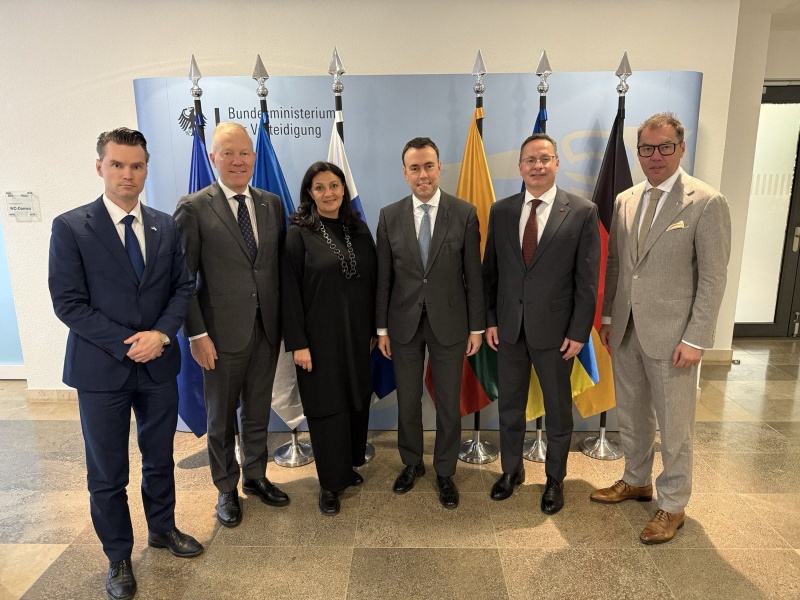
Ivanna Klympush-Tsintsadze, Chair of the Verkhovna Rada Committee on Ukraine’s Integration into the EU, as part of the “United for Ukraine” inter-parliamentary network delegation, held meetings with members of parliament and ministry representatives.
During the visit to Berlin, the delegation met, in particular, with representatives of the Bundestag political groups Alliance 90/The Greens, the Christian Democrats, and the Social Democrats, with members of the Foreign Affairs Committee and the EU Affairs Committee of the Bundestag, with the Chair of the Defence Committee, as well as with representatives of the Ministry of Defence and the Ministry of Foreign Affairs.
Ivanna Klympush-Tsintsadze noted that in Germany the perception of the threat posed by Russia among policymakers has grown significantly and now reflects the real challenges. According to her, many discussions focused on the fact that Russia is waging a war not merely for Ukrainian territories but is attempting to undermine the international order and destroy the European Union and NATO as cohesive structures. “It is essential to prioritise assistance to Ukraine in order to stop this cancerous tumour and prevent its metastasis across Europe. At the same time, Europe must urgently prioritise building up its own defence capabilities. The overwhelming majority of politicians understand this. We appreciate both the coalition parties and everyone who strengthens this awareness — including the Greens, who are currently in the opposition but clearly understand the challenges, opportunities, and tasks, and promote this understanding within German society,” Ivanna Klympush-Tsintsadze said.
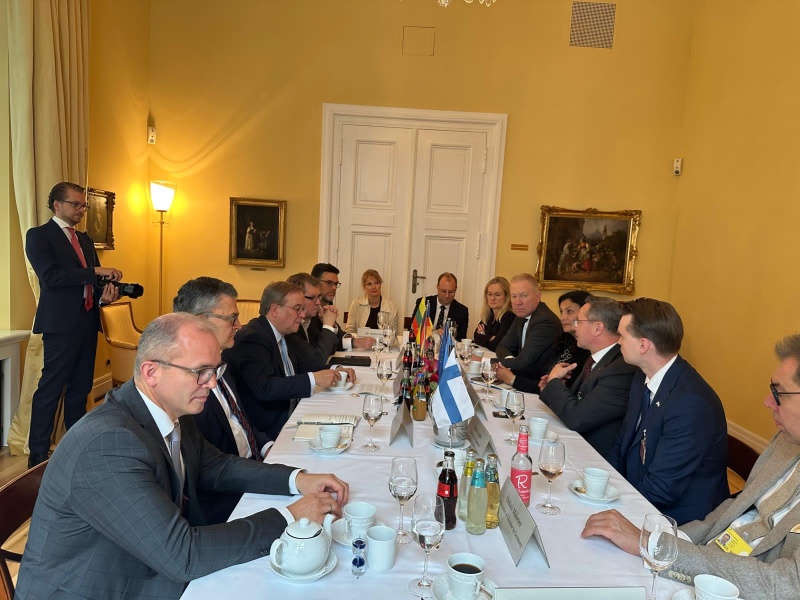
According to her, Germany has quickly travelled a long path of understanding the threats. “We spoke a lot about the need for Germany to assume leadership within the European Union. This is not easy for either politicians or society in Germany from a security perspective. Yet Germany is the country that has the financial, substantive, and practical capacity to exercise leadership in Europe,” she noted. Among Germany’s centrist political forces, she sees a shared understanding that now is a critical moment to urgently support Ukraine, while also strengthening Europe’s internal capacities. It is also necessary to intensify engagement with the countries of South-Western and North-Western Europe so that they, too, are prepared to share responsibility, understanding, and awareness of the challenges Europe faces today.
The meetings also addressed Ukraine’s European integration, particularly the need to open the first negotiation cluster with the EU. “We emphasised that the Hungarian veto must be resolved at the pan-European level, since the artificial obstacles and demands placed on Ukraine by Hungary have nothing to do with real claims and lie in an entirely different dimension,” Ivanna Klympush-Tsintsadze said.
Hybrid threats and manipulation on social media — particularly TikTok and Telegram — were also widely discussed, as well as the joint mechanisms and responses that could be implemented both at the national and EU level. She stressed that the very term “hybrid threats” is misleading, as society often perceives them as something that does not pose direct danger, yet the need to find common tools to counter these threats is growing. “In Germany itself, there is a very dangerous challenge related to the polarisation of society due to the rise of populist, far-right, and far-left messages and rhetoric, which do not address modern challenges but offer simple solutions to the public. These dangers must be confronted decisively,” she added.
Euro-Atlantic integration was also discussed during the meetings. “Our NATO membership — the real and only security guarantee — cannot in any way be a subject of discussion with the Russian Federation. Many of our interlocutors in Germany agreed with this. At the same time, we cannot yet say there is full consensus on this issue — much work still remains — but we have achieved a great deal. Ukraine has changed the paradigm: today, security challenges for our country and for the continent are voiced not only by Ukraine itself, but also by representatives of many countries who share this position. We value this. I am grateful to all colleagues who joined this mission. I am convinced that our new and additional efforts to strengthen support for Ukraine — primarily in the military sphere, in increasing sanctions pressure on the Russian Federation, and in applying the principle of ‘peace through strength’ — will definitely work,” Ivanna Klympush-Tsintsadze concluded.
During the visit to Berlin, the delegation met, in particular, with representatives of the Bundestag political groups Alliance 90/The Greens, the Christian Democrats, and the Social Democrats, with members of the Foreign Affairs Committee and the EU Affairs Committee of the Bundestag, with the Chair of the Defence Committee, as well as with representatives of the Ministry of Defence and the Ministry of Foreign Affairs.
Ivanna Klympush-Tsintsadze noted that in Germany the perception of the threat posed by Russia among policymakers has grown significantly and now reflects the real challenges. According to her, many discussions focused on the fact that Russia is waging a war not merely for Ukrainian territories but is attempting to undermine the international order and destroy the European Union and NATO as cohesive structures. “It is essential to prioritise assistance to Ukraine in order to stop this cancerous tumour and prevent its metastasis across Europe. At the same time, Europe must urgently prioritise building up its own defence capabilities. The overwhelming majority of politicians understand this. We appreciate both the coalition parties and everyone who strengthens this awareness — including the Greens, who are currently in the opposition but clearly understand the challenges, opportunities, and tasks, and promote this understanding within German society,” Ivanna Klympush-Tsintsadze said.
According to her, Germany has quickly travelled a long path of understanding the threats. “We spoke a lot about the need for Germany to assume leadership within the European Union. This is not easy for either politicians or society in Germany from a security perspective. Yet Germany is the country that has the financial, substantive, and practical capacity to exercise leadership in Europe,” she noted. Among Germany’s centrist political forces, she sees a shared understanding that now is a critical moment to urgently support Ukraine, while also strengthening Europe’s internal capacities. It is also necessary to intensify engagement with the countries of South-Western and North-Western Europe so that they, too, are prepared to share responsibility, understanding, and awareness of the challenges Europe faces today.
The meetings also addressed Ukraine’s European integration, particularly the need to open the first negotiation cluster with the EU. “We emphasised that the Hungarian veto must be resolved at the pan-European level, since the artificial obstacles and demands placed on Ukraine by Hungary have nothing to do with real claims and lie in an entirely different dimension,” Ivanna Klympush-Tsintsadze said.
Hybrid threats and manipulation on social media — particularly TikTok and Telegram — were also widely discussed, as well as the joint mechanisms and responses that could be implemented both at the national and EU level. She stressed that the very term “hybrid threats” is misleading, as society often perceives them as something that does not pose direct danger, yet the need to find common tools to counter these threats is growing. “In Germany itself, there is a very dangerous challenge related to the polarisation of society due to the rise of populist, far-right, and far-left messages and rhetoric, which do not address modern challenges but offer simple solutions to the public. These dangers must be confronted decisively,” she added.
Euro-Atlantic integration was also discussed during the meetings. “Our NATO membership — the real and only security guarantee — cannot in any way be a subject of discussion with the Russian Federation. Many of our interlocutors in Germany agreed with this. At the same time, we cannot yet say there is full consensus on this issue — much work still remains — but we have achieved a great deal. Ukraine has changed the paradigm: today, security challenges for our country and for the continent are voiced not only by Ukraine itself, but also by representatives of many countries who share this position. We value this. I am grateful to all colleagues who joined this mission. I am convinced that our new and additional efforts to strengthen support for Ukraine — primarily in the military sphere, in increasing sanctions pressure on the Russian Federation, and in applying the principle of ‘peace through strength’ — will definitely work,” Ivanna Klympush-Tsintsadze concluded.
More posts by topic
“News”
16 September 2026 12:00
20 April 2026 10:15
16 April 2026 13:30
09 April 2026 11:01
07 April 2026 11:34
24 February 2026 10:38
19 February 2026 10:33
11 February 2026 10:31
09 February 2026 10:29
06 February 2026 10:25