Ivanna Klympush-Tsintsadze meets with Bundestag Member Katrin Göring-Eckardt
11 February 2026, 10:31
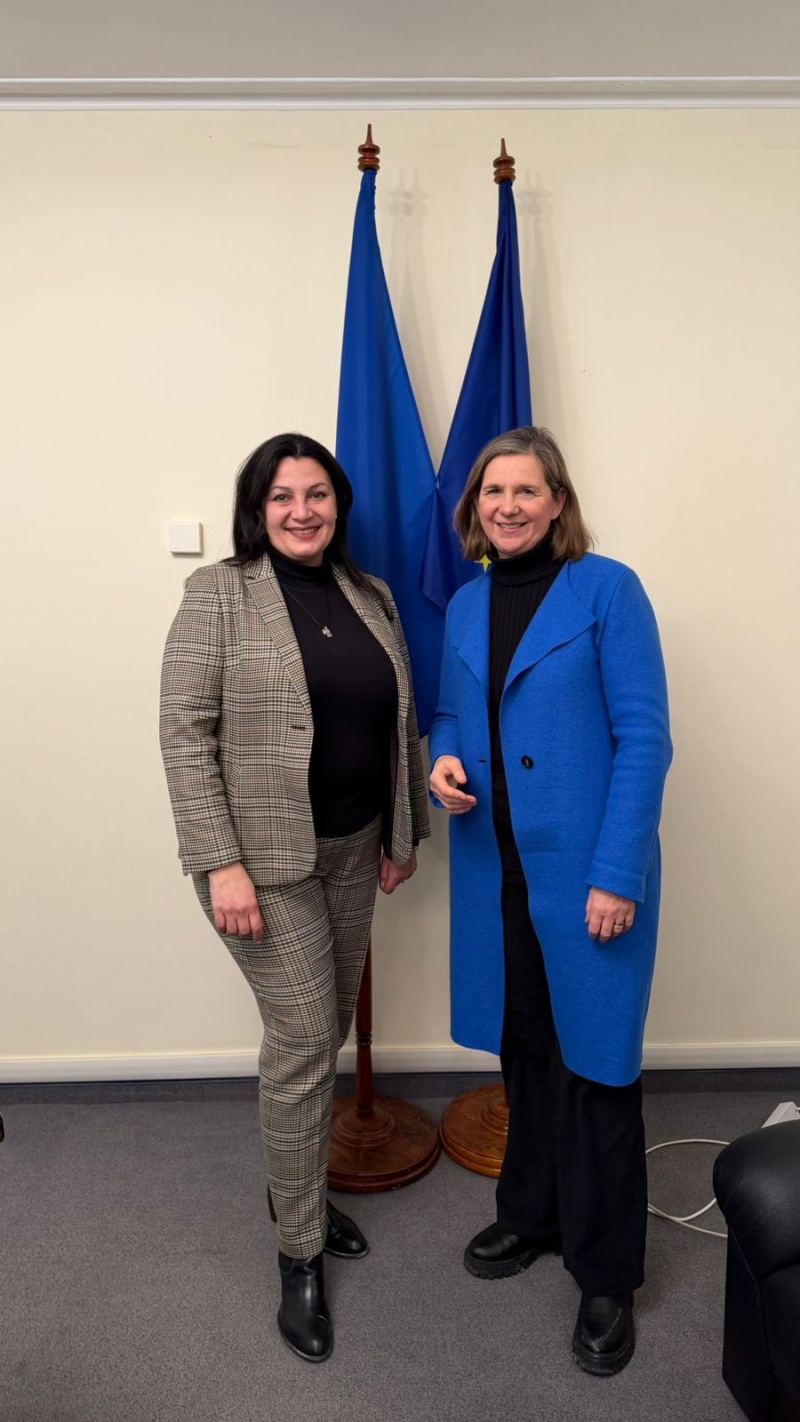
The Chair of the Verkhovna Rada Committee on Ukraine’s Integration into the EU, Ivanna Klympush-Tsintsadze, met with Bundestag Member Katrin Göring-Eckardt, a representative of the opposition parliamentary group Alliance 90/The Greens.
Katrin Göring-Eckardt was interested in the current situation in Ukraine, in particular which humanitarian needs are currently the most urgent and what assistance international organisations can provide. The parties also discussed Ukraine’s European integration and the progress of reforms.
Ivanna Klympush-Tsintsadze thanked Katrin Göring-Eckardt for her visit to Ukraine and noted that the difficult situation in the country is unfortunately not receiving sufficient coverage in international media at the moment. “Therefore, it is very important that people who visit Ukraine convey to their societies the truth about the extreme conditions in which Ukrainians are surviving and about how critical the partners’ support is, especially in terms of weapons and air defence systems,” the Chair of the Committee said.
She noted that Russia is trying by any means to destroy Ukraine and Ukrainians, striking energy infrastructure, enterprises that contribute to the state budget, and civilian facilities. “Ukraine is currently facing a real humanitarian catastrophe. What Russia is doing is genocide against Ukraine. It seeks to achieve our destruction by any means possible — through shelling, cold, emigration — anything to destroy us or force us to capitulate,” Ivanna Klympush-Tsintsadze said.
The Chair of the Committee emphasised that Putin is not winning in Ukraine. According to her, this is a myth that is currently circulating in the West. “Ukrainians are tired and exhausted because we are human beings, but this does not mean that we are ready to capitulate. Everything that Russian occupation brings is far worse than what we are experiencing now,” she stressed.
She called for efforts to hold Russia accountable for the war crimes and crimes against humanity it is committing in Ukraine, noting that the issue of Russia’s accountability is not being addressed in the negotiations currently taking place. Ivanna Klympush-Tsintsadze also reminded that in any discussions regarding the occupied territories it is important to remember that the issue concerns, first and foremost, people, not only land. These people — Ukrainians — expect that Ukraine will take care of them.
Regarding European integration, Ivanna Klympush-Tsintsadze stressed that Ukraine can and should become a strong member of the European Union. At the same time, alongside fulfilling its own commitments on this path, it is also important to ensure transparency and clarity from the EU. The Chair of the Committee noted that the pace and progress of reforms in Ukraine have recently undergone changes. This concerns both the regression of the decentralisation reform and corruption scandals. Therefore, it is necessary to ensure, both through efforts within Ukraine and through vigilant oversight by partners, that these reforms remain irreversible, as the success of Ukraine’s path towards the European Union directly depends on their implementation.
Katrin Göring-Eckardt was interested in the current situation in Ukraine, in particular which humanitarian needs are currently the most urgent and what assistance international organisations can provide. The parties also discussed Ukraine’s European integration and the progress of reforms.
Ivanna Klympush-Tsintsadze thanked Katrin Göring-Eckardt for her visit to Ukraine and noted that the difficult situation in the country is unfortunately not receiving sufficient coverage in international media at the moment. “Therefore, it is very important that people who visit Ukraine convey to their societies the truth about the extreme conditions in which Ukrainians are surviving and about how critical the partners’ support is, especially in terms of weapons and air defence systems,” the Chair of the Committee said.
She noted that Russia is trying by any means to destroy Ukraine and Ukrainians, striking energy infrastructure, enterprises that contribute to the state budget, and civilian facilities. “Ukraine is currently facing a real humanitarian catastrophe. What Russia is doing is genocide against Ukraine. It seeks to achieve our destruction by any means possible — through shelling, cold, emigration — anything to destroy us or force us to capitulate,” Ivanna Klympush-Tsintsadze said.
The Chair of the Committee emphasised that Putin is not winning in Ukraine. According to her, this is a myth that is currently circulating in the West. “Ukrainians are tired and exhausted because we are human beings, but this does not mean that we are ready to capitulate. Everything that Russian occupation brings is far worse than what we are experiencing now,” she stressed.
She called for efforts to hold Russia accountable for the war crimes and crimes against humanity it is committing in Ukraine, noting that the issue of Russia’s accountability is not being addressed in the negotiations currently taking place. Ivanna Klympush-Tsintsadze also reminded that in any discussions regarding the occupied territories it is important to remember that the issue concerns, first and foremost, people, not only land. These people — Ukrainians — expect that Ukraine will take care of them.
Regarding European integration, Ivanna Klympush-Tsintsadze stressed that Ukraine can and should become a strong member of the European Union. At the same time, alongside fulfilling its own commitments on this path, it is also important to ensure transparency and clarity from the EU. The Chair of the Committee noted that the pace and progress of reforms in Ukraine have recently undergone changes. This concerns both the regression of the decentralisation reform and corruption scandals. Therefore, it is necessary to ensure, both through efforts within Ukraine and through vigilant oversight by partners, that these reforms remain irreversible, as the success of Ukraine’s path towards the European Union directly depends on their implementation.